
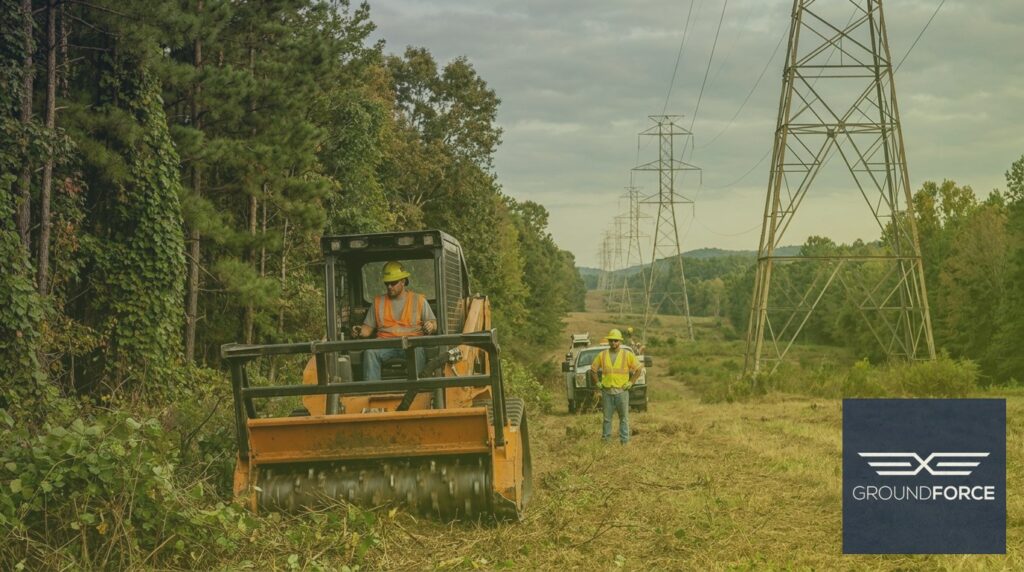
Utility vegetation management ranks as the largest single maintenance expense for electric transmission and distribution operators. Federal reliability mandates, public safety liability, and the documented link between uncontrolled vegetation and grid outages drive vegetation management spending across rights-of-way and infrastructure corridors. Georgia utilities face a compounding challenge: fast-growing Southeast vegetation demands more aggressive, more frequent, and more strategically integrated vegetation management programs than most other U.S. regions.
Why is vegetation management so critical for utility infrastructure?
Utility vegetation management is critical because trees and brush contacting energized infrastructure cause outages, wildfires, electrocutions, and property damage. The Federal Energy Regulatory Commission identifies vegetation contact as the single largest cause of electric power outages in the United States, and federal reliability standards make controlling that contact a legal obligation rather than routine landscaping.
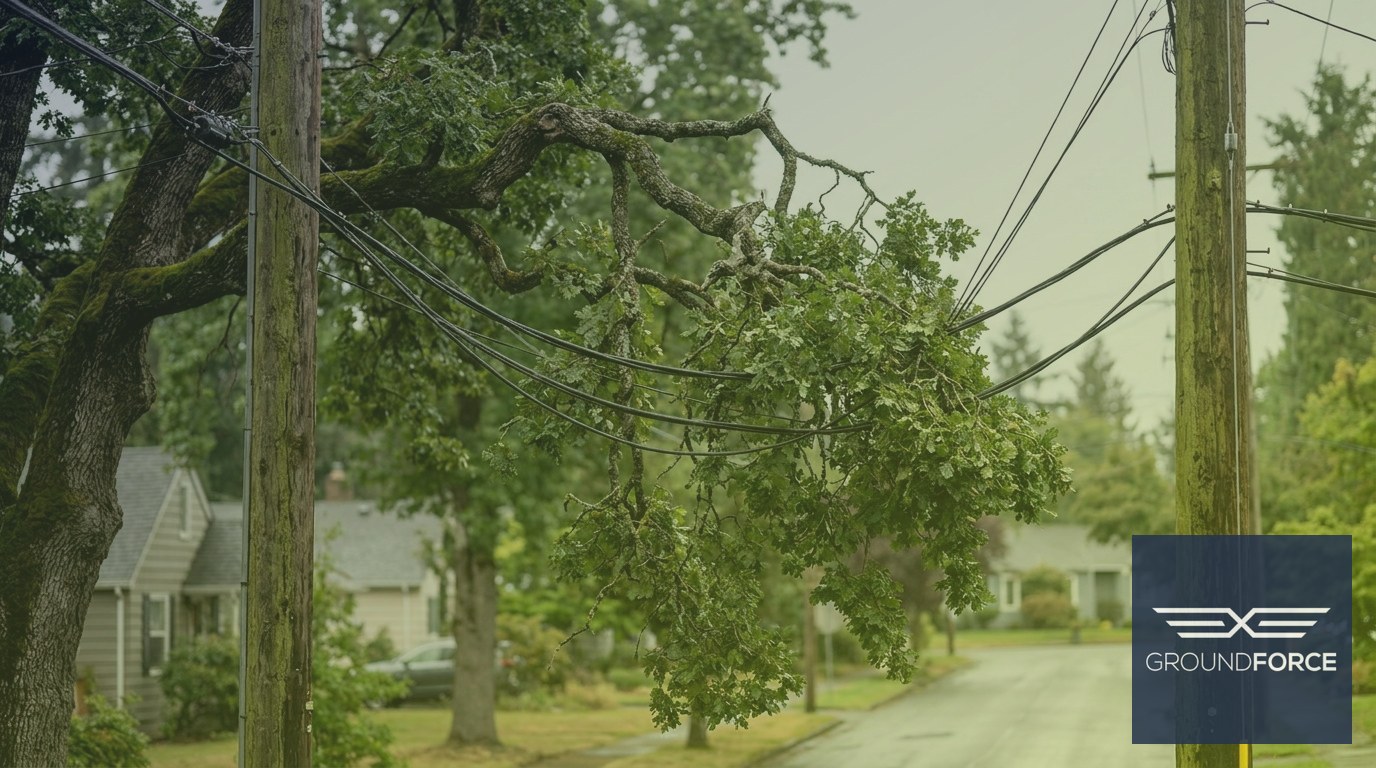
The causal chain is direct. On August 14, 2003, a high-voltage line in northern Ohio sagged into overgrown trees and shut down, triggering failures that left 50 million people across eight northeastern states and southeastern Canada without power for up to two days, according to Scientific American (2024). FERC concluded that had the specific trees involved been pruned or removed beforehand, the blackout most likely would not have occurred (Electric Energy Online). The Department of Energy estimates power outages cost Americans $150 billion per year (American Public Power Association, 2022).
Spending reflects that exposure. Fortune Business Insights (2024) reports U.S. electric utilities spend almost $7 billion annually on utility vegetation management services and solutions, and ACG Insights (2024) places total U.S. utility vegetation management spending near $8 billion, frequently the largest line item in a utility’s annual operations and maintenance budget. Expenditure at that scale signals regulatory and operational necessity, not discretionary maintenance. The why utilities spend billions on vegetation control covers how these annual budgets divide across transmission corridors, distribution circuits, and pipeline rights-of-way.
Vegetation contact also creates direct legal exposure. Downed conductors start wildfires, energize fallen limbs, and injure members of the public, and utilities carry liability for property damage and personal injury when contact occurs on lines the utilities maintain.
Five utility sectors carry distinct vegetation obligations. Electric transmission operators answer to federal reliability mandates because contact events on high-voltage lines can cascade across regions. Electric distribution utilities manage neighborhood trees to protect local service reliability and limit customer outages. Natural gas operators keep pipeline corridors clear so aerial patrols and ground crews can detect leaks and corrosion. Water and wastewater utilities control root intrusion and canopy over easements to protect mains and preserve access. Telecommunications providers clear vegetation around poles and aerial cables to maintain service continuity and prevent physical damage to fiber and copper plant.
The fieldwork is hazardous in its own right. OSHA classifies line-clearance tree trimming as among the most hazardous occupations, and utility contractors must comply with OSHA 29 CFR 1910.269, the electric power generation, transmission, and distribution standard, in addition to standard arboricultural safety requirements.
What types of vegetation threats do utilities face on their rights-of-way?
Utilities face four categories of vegetation threats on their rights-of-way: tall-growing trees and shrubs that breach conductor clearances, fast-growing invasives that re-establish violations within a season, deep-rooted species that disturb buried infrastructure, and growth that blocks sight-lines and access.
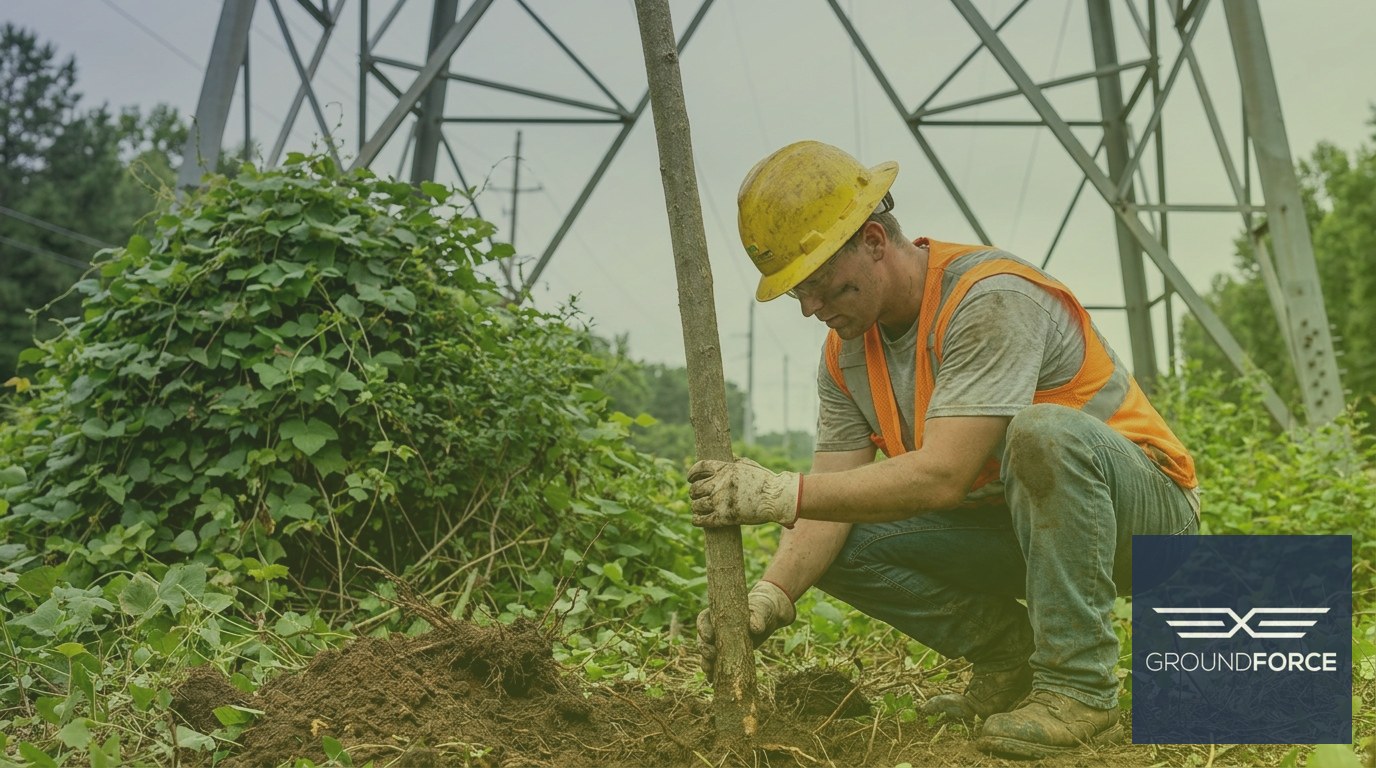
- Tall-growing species. Trees and large shrubs that grow into conductor clearance zones are the primary threat to electric and telecommunications lines. The Federal Energy Regulatory Commission (FERC) reported in 2004 that trees contacting a 345kV line on July 2, 1996 caused an outage to 2.2 million customers, and that trees contacting a 500kV line on August 10, 1996 ultimately affected 7.5 million customers in seven states. T&D World reported in 2020 that vegetation caused an average of 23.2% of distribution outages among responding utilities.
- Fast-growing Southeast invasives. Kudzu, Chinese privet, and Ailanthus (tree-of-heaven) grow fast enough to re-establish a clearance violation within a single growing season, which forces shorter re-clearing intervals than native species demand.
- Root and soil disruption. Deep-rooted species near buried pipelines and water infrastructure displace soil as their root systems expand, and that pressure can damage pipe coatings and joints.
- Sight-line and access obstruction. Vegetation that poses no direct contact threat still blocks inspection sight-lines and emergency equipment egress, obscuring ground conditions from routine patrols.
Some utilities pair drone-assisted aerial survey with LiDAR modeling to identify pre-violation encroachment, detecting growth trajectories before a tree enters the violation zone. The transmission line right-of-way clearing strategies cover how pre-violation detection enables proactive rather than reactive clearing.
What regulations govern utility vegetation management?
Utility vegetation management is governed by NERC FAC-003 for electric transmission, PHMSA 49 CFR Part 192 for natural gas pipelines, and state public utility commission rules and utility tariffs for local distribution lines. Substation vegetation management adds NERC CIP physical security obligations on top.
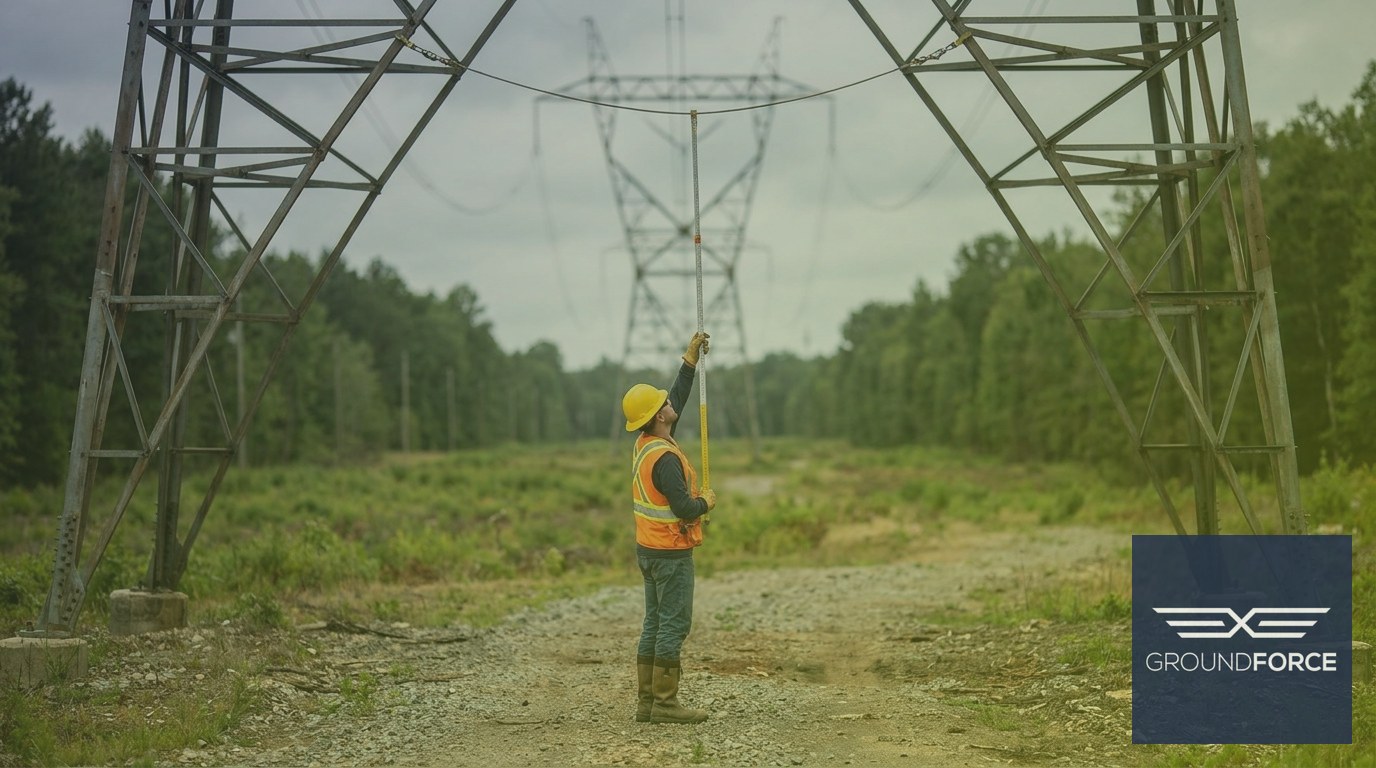
NERC FAC-003 applies to electric transmission operators only, not distribution circuits. According to Davis Wright Tremaine LLP (2012), FAC-003-2 requires each transmission owner to complete 100% of its annual vegetation management plan and to perform a vegetation inspection of 100% of its applicable transmission lines against documented clearance standards. Penalties accrue per violation per day: ReliabilityFirst (2025) reports the average penalty per FAC-003 violation exceeds $200,000, and approximately 58% of violations processed in settlements posed a serious risk to bulk electric system reliability. The standard exists because the U.S.-Canada Power System Outage Task Force listed inadequate vegetation management as one of the four principal causes of the 2003 Northeast blackout (Daily Galaxy, 2026). The complete NERC vegetation management framework details these inspection cycles, clearance distances, and documentation duties for transmission owners.
Distribution circuits, the lines most people see along roads, fall outside FAC-003 entirely. State public utility commission rules and individual utility tariffs govern that work, and Georgia’s Public Service Commission sets trimming standards for investor-owned utilities. A tree that falls on a neighborhood line can trigger state enforcement but never a NERC penalty. This distinction is widely misunderstood by property owners and even some utility contractors.
Substation vegetation management has distinct requirements from ROW management, including security sight lines, fire clearance zones, and NERC CIP physical security perimeter obligations around fenced assets.
For natural gas, PHMSA 49 CFR Part 192 requires pipeline operators to keep rights-of-way clear enough to allow aerial and ground patrol and to maintain marker visibility. The utility and infrastructure vegetation guides cover these sector-specific obligations for gas, water, and telecommunications corridors.
How does Integrated Vegetation Management (IVM) work for utilities?
Integrated Vegetation Management is a multi-method approach that establishes low-growing stable plant communities to suppress tall-growing species long-term. On a utility right-of-way, IVM replaces the repeated clearing cycle with a managed plant community that resists tree invasion.
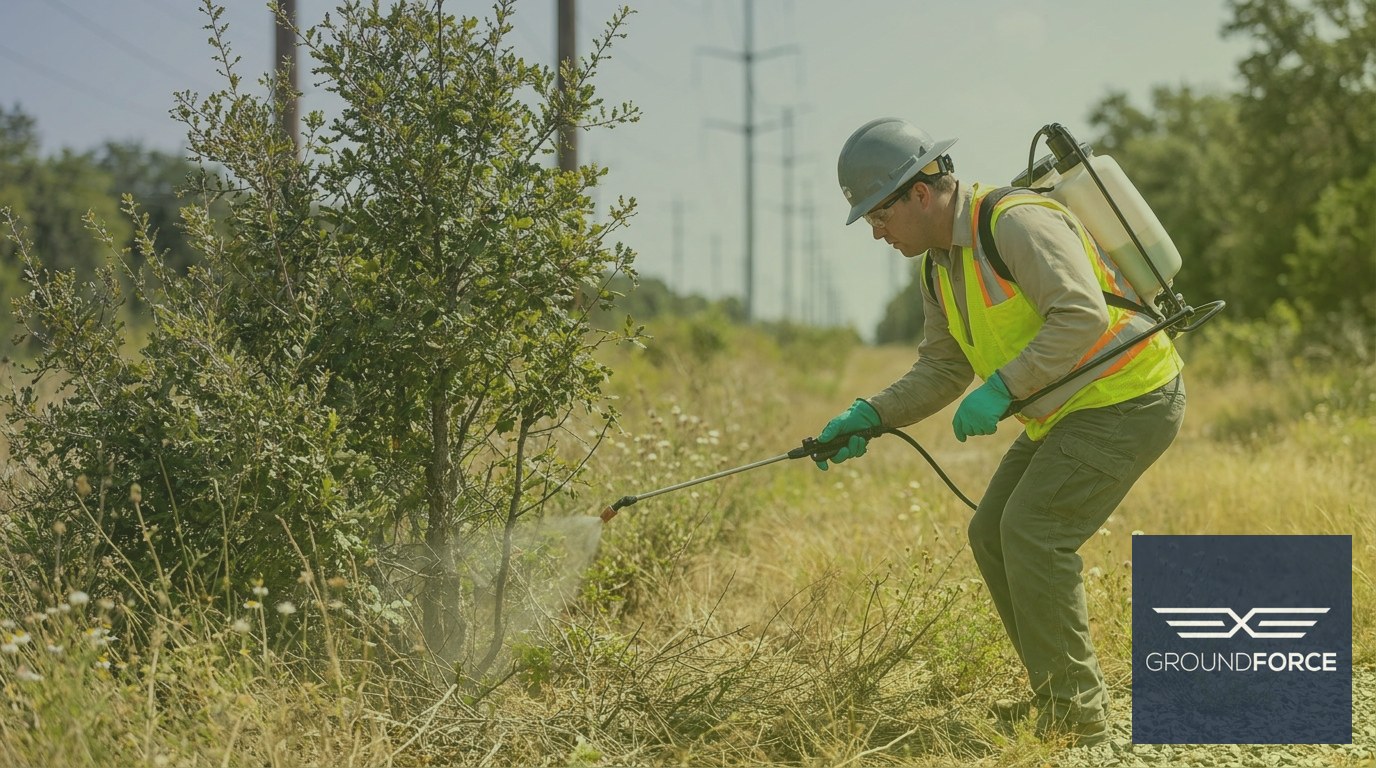
IVM combines four control methods; no single method qualifies as IVM on its own:
1. Selective herbicide application targets tall-growing species while leaving grasses, forbs, and low shrubs intact, so the desirable community fills the corridor. 2. Mechanical cutting removes dense stems where herbicides are restricted, such as near waterways. 3. Biological controls use natural competition and permitted introduced agents to hold target species in check. 4. Manual removal handles individual hazard stems and precision work around poles and structures.
The biology carries the program. Once low-growing species dominate the corridor, the established community shades out tree seedlings and competes for moisture, so each treatment cycle removes fewer woody stems and mechanical clearing frequency declines.
The cost advantage arrives over a 5 to 10 year horizon, not immediately. During years 1 through 3, an IVM program can cost more than conventional mow-and-spray cycles because the utility funds selective herbicide treatments and community establishment up front. Utilities that abandon IVM during budget pressure cycles forfeit the long-term savings and return to full-cost clearing. The IVM strategies for utility ROW cost control detail how utilities budget the establishment phase against declining per-cycle costs.
The reliability payoff is measurable. A 2022 American Public Power Association report found improved vegetation management can reduce storm-related tree damage by as much as 63%. A 2024 U.S. Department of Energy Grid Deployment Office analysis of Duke Energy circuits in North Carolina found that increasing trimming frequency by one year, such as from every four years to every three, would likely lead to a 13% reduction in vegetation-related outages per month. The comprehensive utility vegetation management approach places IVM alongside inspection cycles and hazard-tree programs as one corridor-control layer.
How do vegetation management requirements differ across utility sectors?
Vegetation management requirements shift with each utility sector’s regulator and physical risk profile. NERC FAC-003 governs electric transmission, state public utility commissions govern electric distribution, PHMSA governs natural gas pipelines, easement terms govern water utilities, and internal standards govern telecommunications lines.
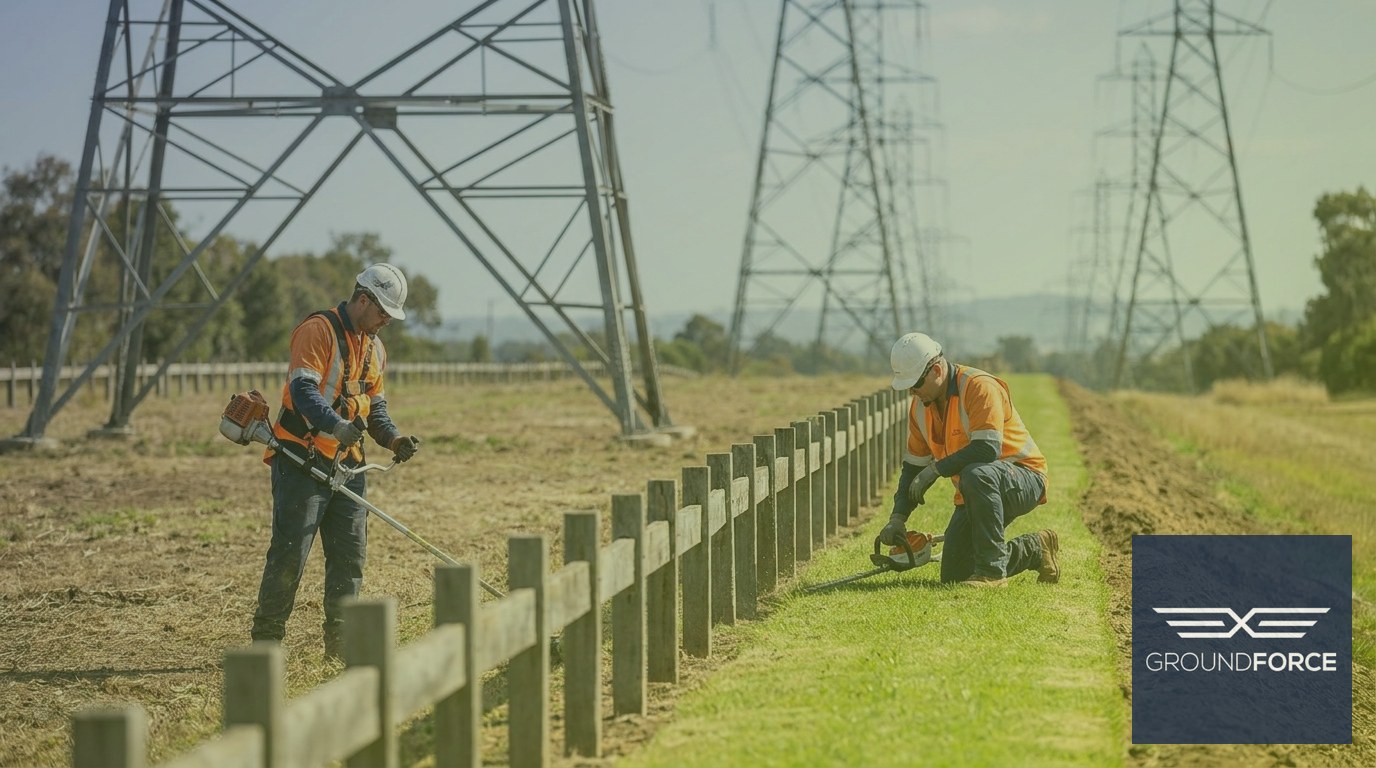
1. Electric transmission: NERC FAC-003 sets mandatory clearance distances on transmission rights-of-way, the widest corridors in the utility industry at 50 to 150 feet or more. Transmission operators maintain the most stringent clearance documentation of any sector and inspect every line annually.
2. Electric distribution: State public utility commission rules govern distribution vegetation work across narrower rights-of-way. Trimming cycles typically run four to six years, and customer complaint pressure shapes program design because distribution lines run directly through neighborhoods and service yards.
3. Natural gas: PHMSA governs vegetation management requirements for natural gas and hazardous liquid pipeline rights-of-way under 49 CFR Part 192. Pipeline corridor work targets aerial patrol visibility and marker access rather than overhead conductor clearance, though tree-fall remains a real hazard to pipeline integrity. The same federal framework shapes vegetation management for natural gas distribution companies in Georgia at the local distribution level.
4. Water and wastewater: No single federal right-of-way vegetation standard governs water utilities, so local utility policies and easement terms govern instead. Managing vegetation around water utility pipelines means keeping valves and manholes reachable for inspection and preventing root intrusion into mains.
5. Telecommunications: No federal vegetation mandate covers most telecom lines, so internal company standards govern. Tower sites carry fire-clearance and access requirements that parallel the substation vegetation safety and compliance rules at electric facilities, with clearance radius and fuel-load limits varying by jurisdiction and tower owner policy.
What makes utility vegetation management in Georgia and the Southeast uniquely challenging?
Georgia’s humid subtropical climate sustains a near-year-round growing season, invasive species like kudzu regrow faster here than in most of the continental United States, and hurricanes, ice storms, and drought cycles force utilities to plan vegetation budgets around storm recovery.
Southeast growing conditions require more frequent vegetation management cycles than national utility standards assume. National transmission programs typically run on four-year cycles, but Georgia’s long, warm growing season closes the clearance envelope far faster. Georgia utilities and their contractors typically operate on two- to three-year cycles to hold the same clearance that a four-year cycle achieves in drier or colder climates.
Invasive species compound the cycle compression. Documented kudzu regrowth exceeds one foot per day during peak season, and Chinese privet and re-sprouting loblolly pine rank among the most aggressive right-of-way invaders in the continental United States.
Extreme weather now shapes program design as much as growth rates do. Hurricanes, ice storms, and drought cycles push Southeast utilities to budget around the extreme weather impacts on utility vegetation programs, treating post-storm recovery as a standing line item rather than an exception.
Ground Force, a Georgia-based eco-friendly vegetation management provider, applies that compressed-cycle discipline across utility rights-of-way, delivering vegetation management for natural gas distributors in Georgia alongside electric and pipeline corridor programs.
Sources
- Fortune Business Insights, “Utility Vegetation Management Market Size, Share, 2032” (2024)
- Fortune Business Insights, “U.S. Utility Vegetation Management Market Size, Share, 2032” (2024)
- Electric Energy Online, “Outsmarting Vegetation-Related Power Outages”
- American Public Power Association, “The Cost of (Not) Cutting Trees” (2022)
- Scientific American, “The 2003 Northeast Blackout – Five Years Later” (2024)
- Daily Galaxy, “An Invasive Tree and a Sagging Power Line Set off North America’s Biggest Blackout” (2026)
- Federal Energy Regulatory Commission (FERC), “Utility Vegetation Management Final Report, March 2004” (2004)
- ReliabilityFirst, “Enforcement Explained: Trends in Vegetation Management” (2025)
- Davis Wright Tremaine LLP, “NERC Petitions FERC for Approval of Revised Vegetation Management Standard” (2012)