

Herbicides anchor commercial vegetation management programs on Georgia properties because chemical control scales across large sites at lower cost than repeated mowing or hand removal. Property managers depend on selective and non-selective herbicide chemistries, precise timing, and calibrated application to control weeds across turf, beds, fence lines, and pavement. The wrong herbicide chemistry, timing, or method creates regulatory liability in Georgia, harms desirable plants and waterways, and causes weed control failures that mechanical methods cannot correct.
What are the main types of herbicides used in commercial vegetation management?
Commercial herbicides are classified by selectivity and timing: selective versus non-selective, and pre-emergent versus post-emergent. Selective herbicides kill target weed families while sparing desirable turf. Non-selective herbicides kill all contacted plant tissue. Pre-emergent herbicides prevent germination, while post-emergent herbicides kill actively growing weeds.
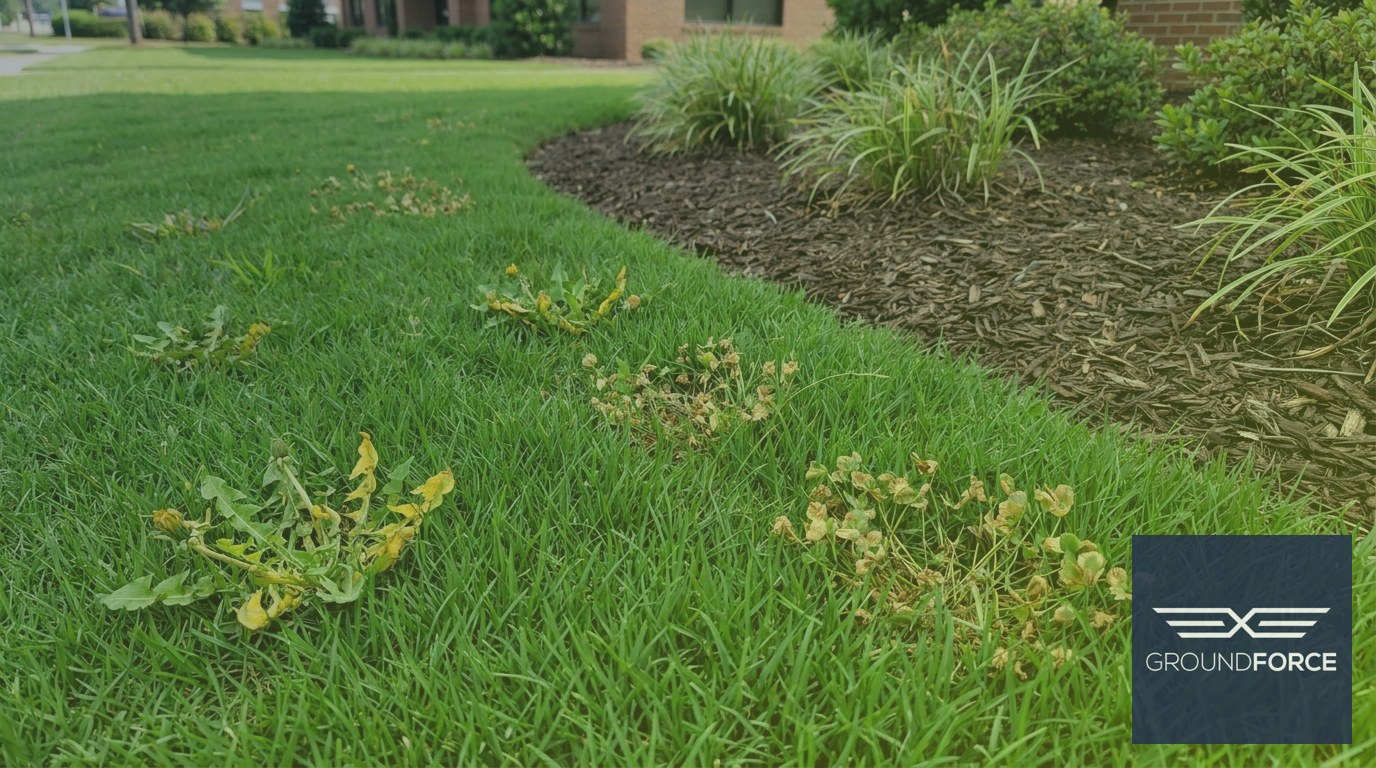
- Selective herbicides target specific plant families. Broadleaf-selective products remove dandelion and clover from turf without harming grasses, and grass-selective products remove weedy grasses from ornamental beds. Choosing between broad-spectrum vs. targeted weed killers depends on the turf, ornamentals, and groundcover a site must protect.
- Non-selective herbicides kill every plant tissue the spray contacts, so property managers reserve non-selective chemistry for fence lines, gravel lots, sidewalk cracks, and full site renovation. Desirable plants receive no protection. The assumption that natural options such as acetic acid (vinegar) formulations are automatically safer is incorrect: horticultural-strength acetic acid is highly corrosive, burns any foliage contacted, and demands the same drift precautions as synthetic chemistry.
- Pre-emergent herbicides are applied before weed seed germination to form a chemical barrier in the soil. The barrier kills seedlings as they sprout, so application after germination accomplishes nothing. Understanding how pre-emergents inhibit weed germination explains why timing drives results: Georgia soil temperatures trigger crabgrass germination early, and the application window often falls between February and early March, weeks earlier than managers from northern states expect. Mistimed application is the single biggest source of pre-emergent failure on Georgia commercial sites.
- Post-emergent herbicides treat weeds that are already growing. Systemic formulations translocate through vascular tissue into the roots, which makes systemic products effective against perennial weeds. Contact formulations kill only the foliar tissue the spray touches, act quickly, and often fail against deep-rooted perennials.
- Residual versus non-residual chemistry controls how long a herbicide stays active in soil. Residual herbicides persist for weeks to months and can injure plants installed later, while non-residual herbicides break down quickly and permit prompt replanting of beds scheduled for seasonal color.
- Common Georgia active ingredients include glyphosate (non-selective, systemic knockdown), imazapyr (broad-spectrum with high soil residual, suited to industrial bare-ground sites), triclopyr (selective for woody brush and broadleaf weeds), and pendimethalin (pre-emergent control of annual grassy weeds such as crabgrass).
Adjuvants are tank additives such as surfactants, drift retardants, and pH buffers, not herbicides themselves, yet adjuvants strongly influence efficacy and off-target movement. Hard water in parts of Georgia antagonizes glyphosate unless the tank mix includes an ammonium sulfate adjuvant.
What herbicide application methods are used on commercial properties?
Commercial applicators use four herbicide application methods: broadcast spraying, spot treatment, basal bark and cut-stump treatment, and soil injection or granular application. Selection depends on target species, acreage, and the drift exposure a site tolerates near buildings, parking lots, and neighboring properties.
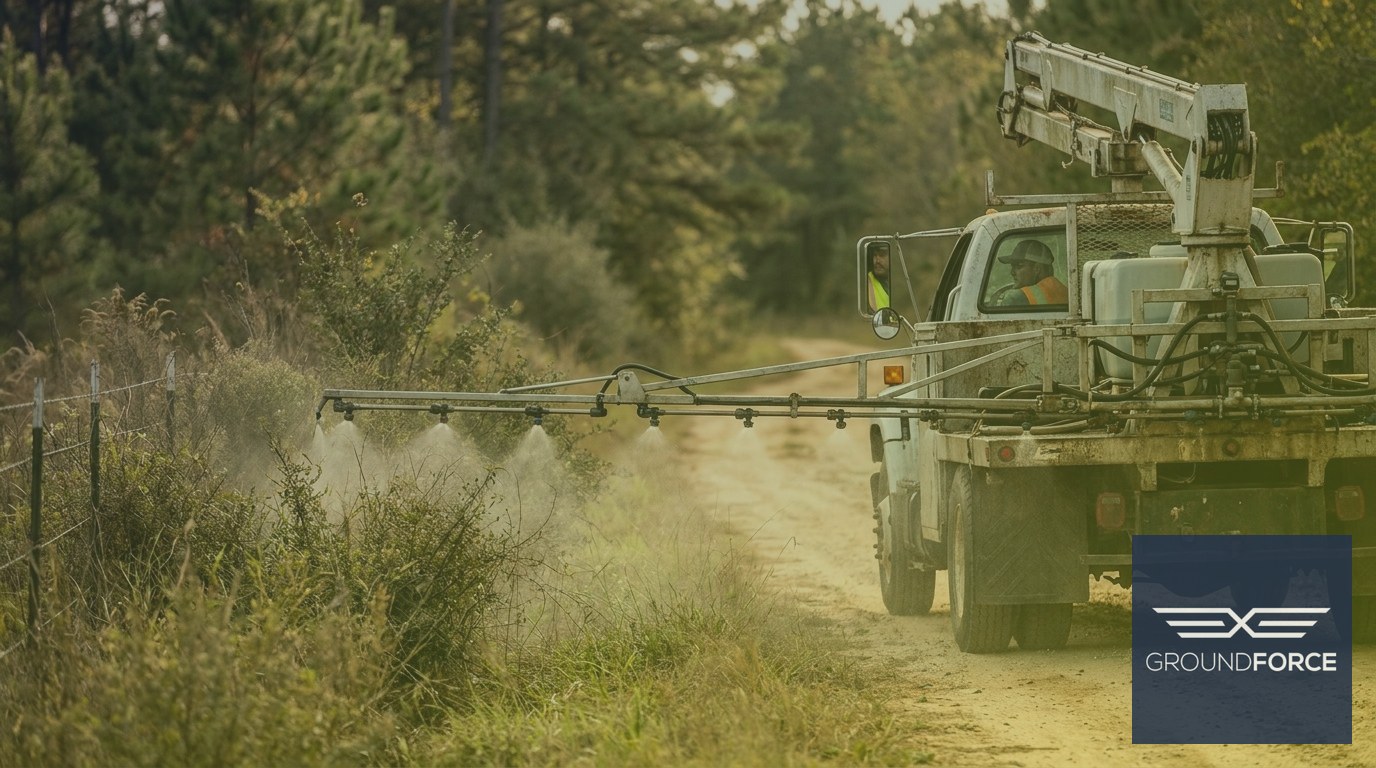
Broadcast spraying uses boom sprayers mounted on trucks or ATVs, with backpack sprayers for tighter areas, to cover large turf and right-of-way zones efficiently. Broadcast application carries the highest drift risk of any method because it releases fine droplets over open ground.
Spot treatment targets individual weeds or problem patches through a handheld wand. Spot treatment reduces total chemical volume and off-target exposure compared with broadcast methods, which makes spot treatment the default near ornamental beds, sidewalks, and signage.
Basal bark and cut-stump treatments deliver concentrated herbicide directly to woody plant tissue, either sprayed around the lower trunk or painted onto a fresh cut surface. These methods control invasive shrubs and trees without broadcast exposure. Cut-stump treatment is especially relevant in Georgia, where Chinese privet and kudzu colonize commercial fence lines and retention pond banks.
Soil injection and granular application place pre-emergent products into or onto the soil before germination, and granulars require post-application irrigation to activate. According to Measure Lawn (2026), the pre-emergent window in USDA zones 7 and 8, which include Georgia, runs from late February through mid-March. Method selection here turns on choosing between preventive and curative herbicides, because preventive products form a soil barrier while curative products target emerged weeds.
Mode-of-action rotation within integrated vegetation management programs prevents herbicide resistance by changing the chemistry weeds face across seasons.
One assumption deserves correction: organic or natural herbicides are not automatically safer for non-target organisms. High-concentration acetic acid, the active ingredient in vinegar-based products, is non-selective, kills soil microbiota on contact, and carries its own label requirements. Vinegar-based products are not a blanket substitute for synthetic herbicides in commercial programs.
What Safety and Environmental Risks Do Herbicides Pose on Commercial Properties?
Herbicides create four primary risks on commercial properties: drift onto non-target plants and neighboring land, runoff into stormwater and surface water, exposure to pets and wildlife, and contamination near protected water bodies. Each risk responds to label compliance, calibrated equipment, and enforced buffer zones.
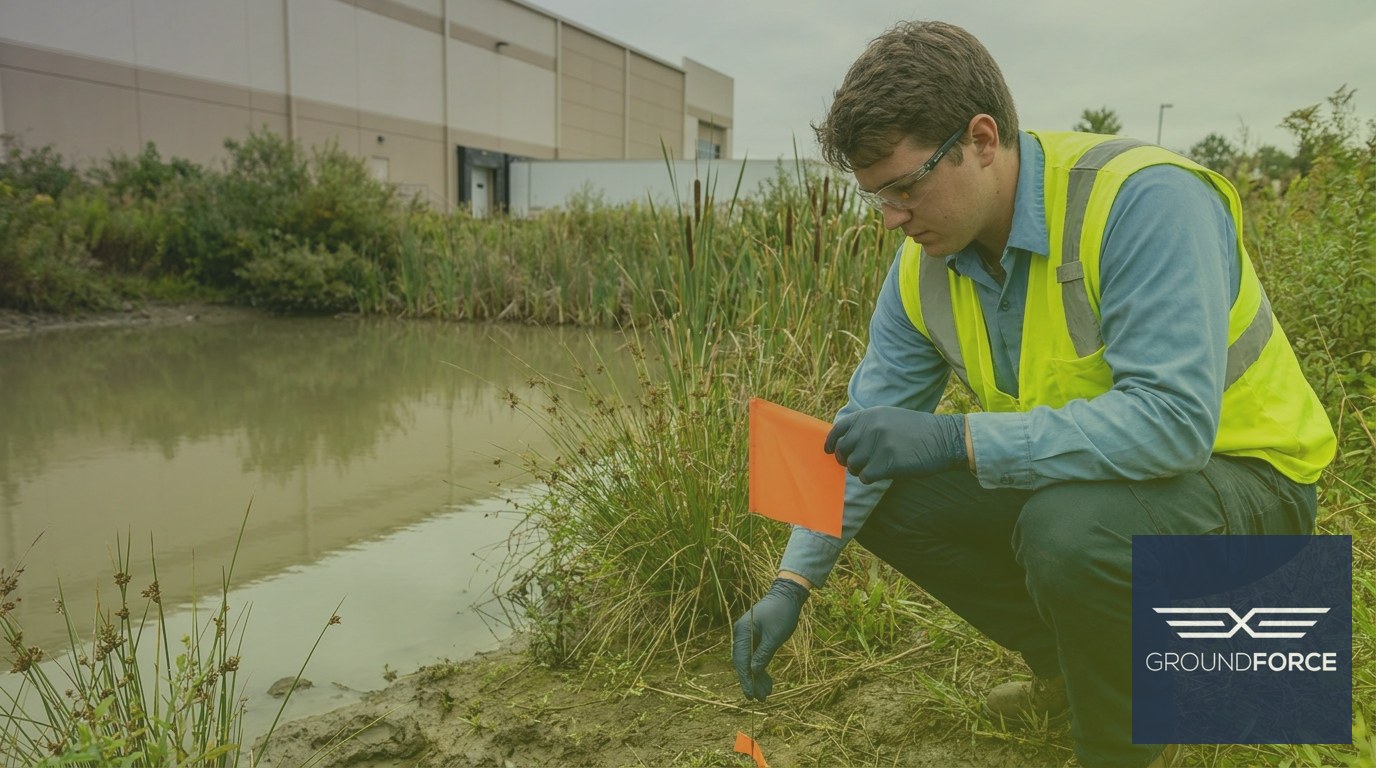
Herbicide drift is the most common source of off-target damage. Wind carries spray droplets to non-target plants, water, or adjacent properties, and wind speed, droplet size, and equipment settings determine how far the droplets travel. The off-target chemical movement prevention methods that control drift include equipment calibration, buffer zones, wind speed restrictions, and adjuvant selection.
Runoff is the second pathway. Soluble herbicides move with stormwater across impervious or compacted soils, and Georgia’s intense summer storm events can carry dissolved active ingredients into storm drains, retention ponds, and streams before the product binds to soil.
Pet and wildlife exposure varies by active ingredient, formulation, and re-entry interval. The science behind herbicide safety for animals shows that granular and liquid formulations leave different residues on turf and ornamentals, and labels set re-entry intervals that range from “once the spray dries” to multiple days for higher-toxicity active ingredients. These intervals are legally binding label conditions, not suggestions, so property managers keep pets, tenants, and staff off treated areas until each interval expires.
Buffer zones protect water bodies. Most herbicide labels mandate no-application buffers near ponds, streams, and wetlands, and the Georgia Environmental Protection Division separately enforces water-protection requirements on commercial applicators.
Repeated use of one chemistry creates herbicide resistance, a long-term environmental risk for commercial landscapes. Georgia confirmed the first glyphosate-resistant Palmer amaranth in 2005, according to Frontiers in Agronomy (2023), and the Weed Science Society of America reported in 2023 that Palmer amaranth now resists ALS, PPO, glufosinate, and auxin herbicides. One female plant produces up to 600,000 viable seeds, according to Simplot Growers Solutions, so resistant populations spread across a property within a few seasons.
What regulations govern herbicide use on commercial properties in Georgia?
Herbicide use on Georgia commercial properties is governed by Georgia Department of Agriculture applicator licensing, Georgia EPD permitting for applications near water, mandatory application recordkeeping, and federal EPA Worker Protection Standards.
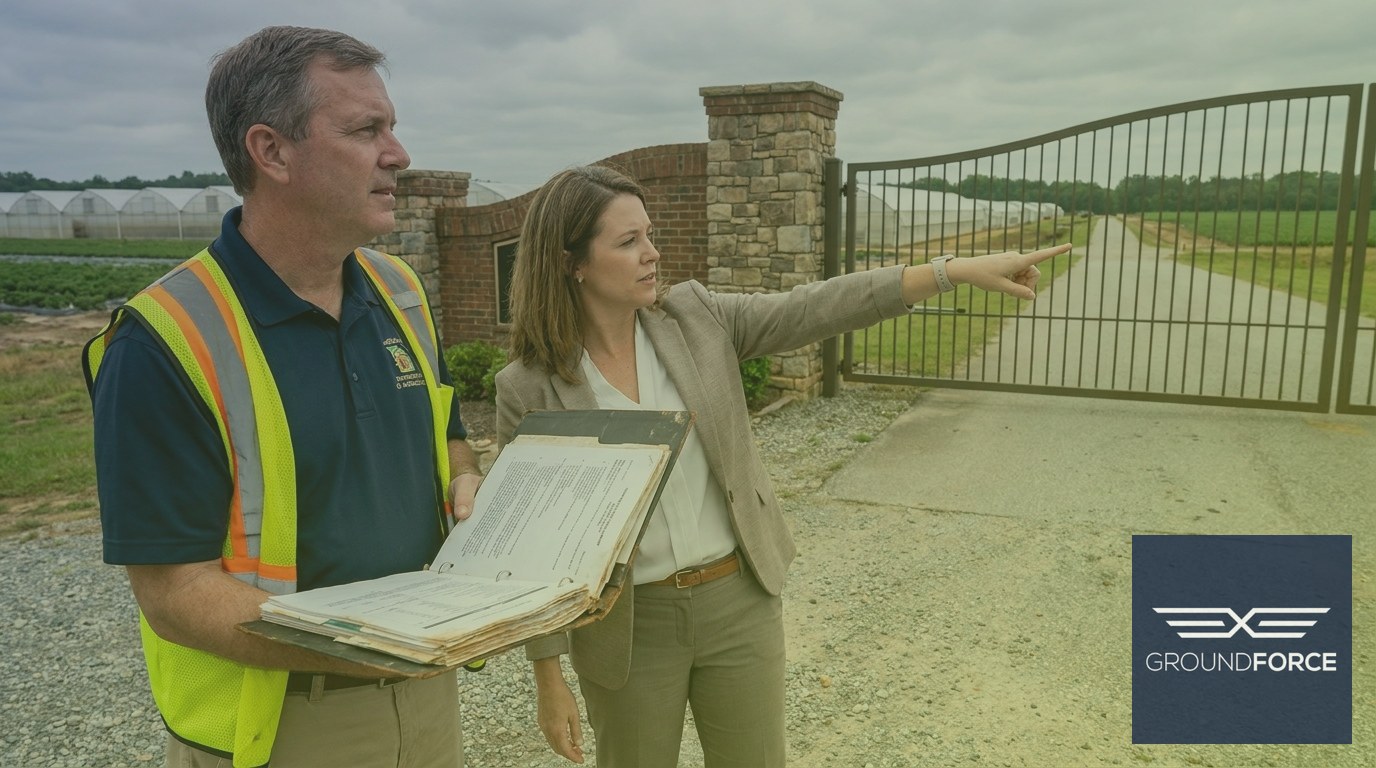
Any herbicide application made for hire on commercial property requires a Georgia Department of Agriculture commercial pesticide applicator license. The Department designates Category 24 for Ornamental and Turfgrass Pest Management and Category 27 for Right-of-Way Pest Control. Gwinnett County notes that a Pesticide Contractor’s license covers any business applying pesticides to another’s land, with at least one certified applicator employed full-time per location. Restricted-use pesticides require a Georgia Department of Agriculture certified pesticide applicator license for purchase and application, so property managers must verify contractor credentials before work begins. The University of Georgia Pesticide Safety Education Program reports licenses last five years, with 6 to 10 recertification hours due 90 days before expiration.
Herbicide applications near Georgia water bodies are regulated by Georgia EPD permitting requirements and mandatory buffer zones, and pond, lake, or wetland treatments require a separate aquatic permit. The EPD rules governing aquatic vegetation treatment explain buffer widths and permit triggers, and the aquatic herbicide compliance in Georgia covers property manager obligations for sites bordering water.
Georgia requires written records of every commercial application, retained for a minimum of two years and subject to Georgia Department of Agriculture inspection. The herbicide application recordkeeping requirements specify product name, EPA registration number, application rate, site, and applicator identity. Per the University of Georgia Pesticide Safety Education Program, contractors record all applications; independent certified applicators record restricted-use applications.
Re-entry intervals printed on herbicide labels are federally enforceable under EPA Worker Protection Standards. A property manager who lets maintenance crews re-enter treated areas before an interval expires commits a violation, even when an outside contractor made the application.
Herbicide drift liability in Georgia can attach to the property owner, not only the licensed applicator. When an unlicensed contractor’s application damages a neighboring property’s landscaping or crops, the owner who hired that contractor can share civil liability. Verifying applicator licensing is a risk-management control, not a paperwork step.
How should herbicides fit into a broader commercial vegetation management program?
Commercial vegetation management programs integrate herbicide use alongside mechanical, cultural, and biological control methods. Herbicides deliver the strongest, most sustainable results when property managers pair chemical treatment with mowing, mulching, competitive planting, and routine weed scouting.
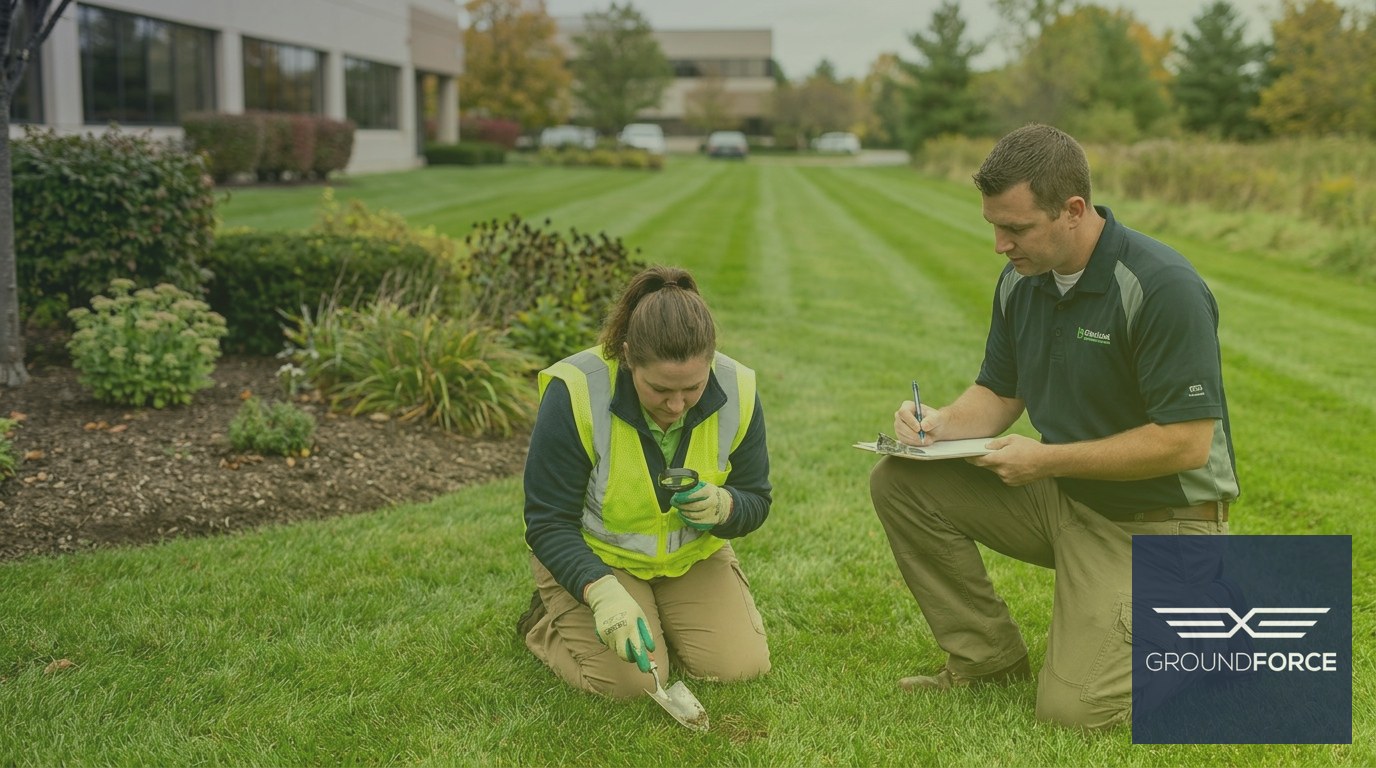
A professional integrated vegetation management (IVM) program follows a set sequence:
1. Scout before every application cycle. IPM-based threshold decision-making means crews treat only when weed pressure exceeds a defined threshold, never on a fixed calendar. Blanket herbicide programs applied on schedule, without checking weed pressure, species composition, or growth stage, routinely over-apply chemistry and accelerate resistance development. Thresholds, not calendars, drive treatment. This scouting discipline is the standard professional practice that distinguishes a vegetation management program from simple chemical spray. Timing matters in Georgia: according to Lawn Synergy (2025), Georgia rarely experiences hard ground freezes, so weed seeds germinate earlier and weeds persist longer than in northern states.
2. Combine herbicides with mechanical and cultural controls. Mowing, mulching, and dense competitive plantings reduce the weed seed bank and shrink the acreage that needs chemical treatment. The best practices across management techniques detail how mechanical and cultural methods lower total herbicide volume on a commercial site.
3. Rotate herbicide modes of action. Herbicide resistance is an active concern in Georgia commercial turf and right-of-way programs, particularly for glyphosate-resistant Palmer amaranth and annual ryegrass. Mode-of-action rotation is the primary resistance management tool, and the herbicide resistance prevention on commercial properties explains rotation planning for Georgia conditions.
4. Add biological controls where available. Insects and fungi that target specific invasive plants are an emerging complement to Georgia herbicide programs, particularly for kudzu and mile-a-minute. These agents are not yet commercially available as standalone alternatives at scale.
Sources
- Georgia Department of Agriculture, “Pesticide Applicator License Categories”
- Georgia Department of Agriculture, “Contractors Pesticide Use Record Form”
- Georgia Department of Agriculture, “Pesticide Products”
- Georgia Department of Agriculture, “Recordkeeping Form for Private Pesticide Applicators”
- Frontiers in Agronomy, “Effect of plant height on control of multiple herbicide-resistant Palmer amaranth (Amaranthus palmeri) in glufosinate/glyphosate-resistant corn” (2023)
- Simplot Growers Solutions, “Glyphosate Resistant Palmer Amaranth: What Do We Do Now?”
- Measure Lawn, “When to Apply Pre-Emergent Herbicide: The Soil Temperature Rule That Stops Crabgrass” (2026)
- Lawn Synergy, “When to Apply Pre Emergent in Georgia” (2025)