
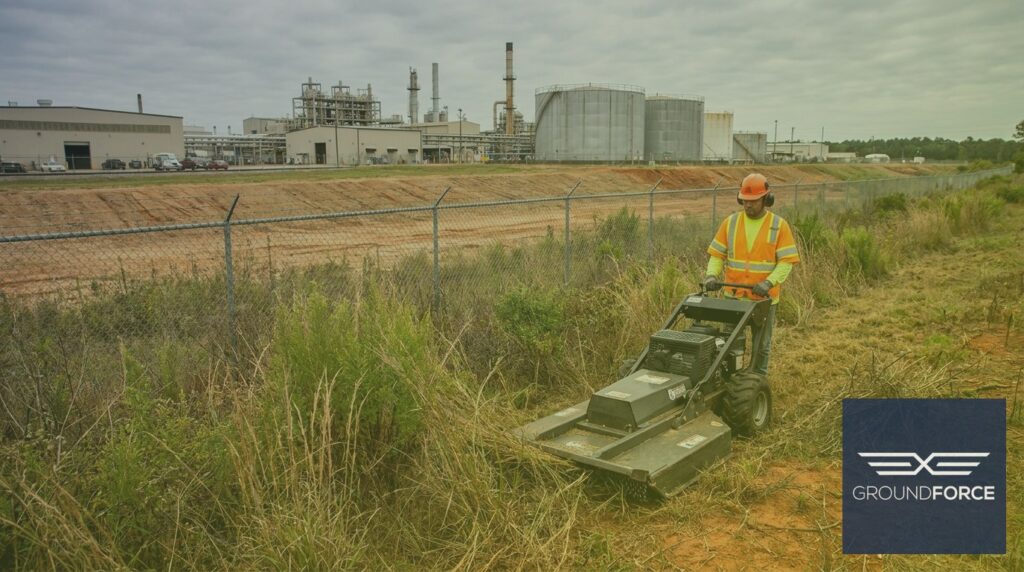
Ground Force provides eco-friendly industrial vegetation control for manufacturing facilities across Georgia. Manufacturing plants face persistent vegetation pressure: overgrown perimeters, fire-load accumulation near fuel storage, pest corridors along fencelines, and tightening regulatory scrutiny. Ground Force builds each vegetation control program for plant environments where fire safety, security, and operational continuity are non-negotiable.
Why do manufacturing facilities need dedicated vegetation control programs?
Manufacturing facilities need dedicated vegetation control programs because unmanaged growth creates fire load near structures and storage areas, shelters pests and trespassers along fencelines, blocks cameras and emergency routes, and stands as a documented liability in regulatory and insurance reviews.
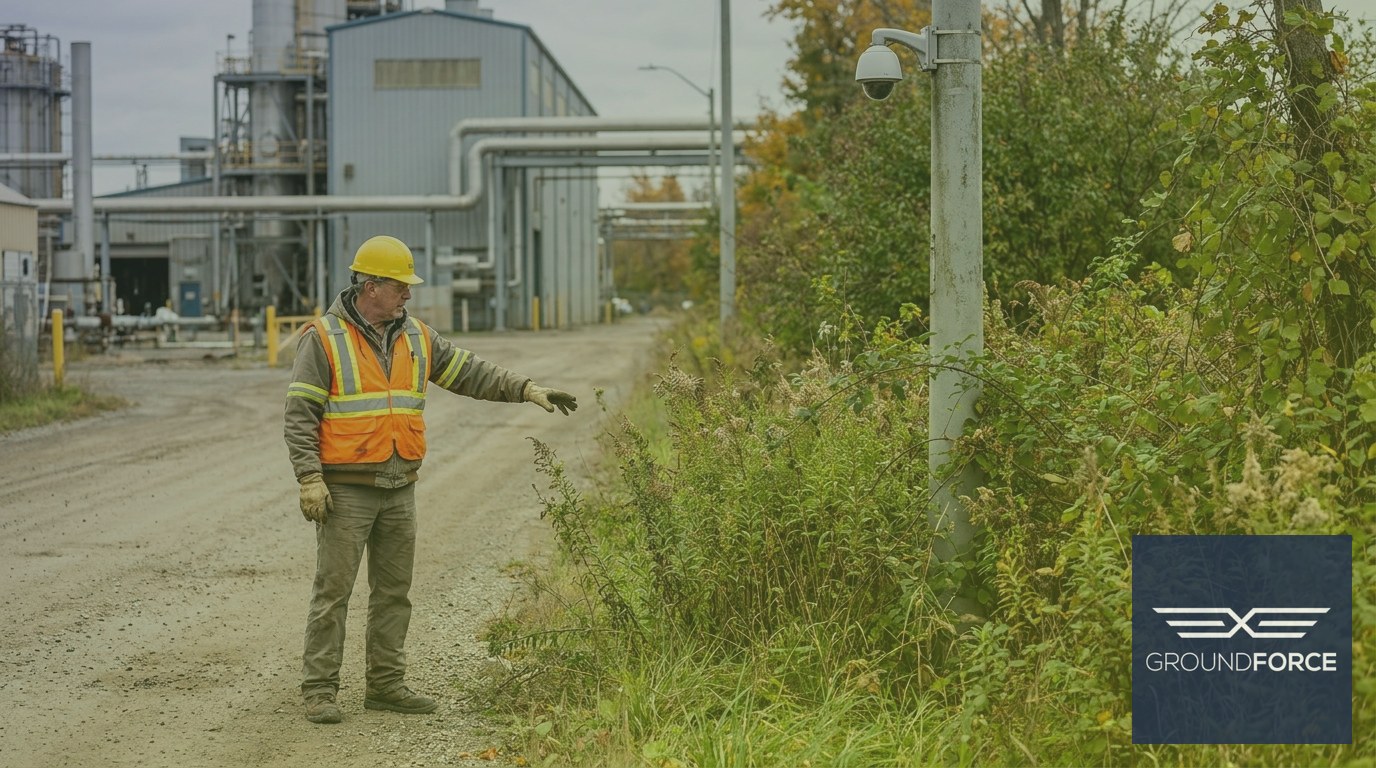
Manufacturing facilities in Georgia require specialized vegetation control across perimeter fencelines, internal access roads, stormwater retention areas, and fuel/chemical storage buffers. Georgia’s automotive assembly plants, food processing facilities, and chemical manufacturing sites concentrate ignition sources, stored product, and truck traffic on a single footprint, so overgrowth interferes with more critical systems per acre than it does on ordinary commercial property. According to WeatherSTEM, Georgia’s humid subtropical climate has no true dry season, which keeps vegetation growing for most of the year and converts a skipped maintenance cycle into a compounding problem.
Fire load accumulation ranks first among the drivers. Unmanaged vegetation at manufacturing sites causes fire load accumulation near structures, pest harborage along fencelines, compromised CCTV sightlines, and stormwater drainage blockage. According to New Pig Corporation (2025), NFPA 30 requires combustible materials such as debris to be kept away from flammable liquid storage areas so the materials cannot become involved and spread a fire. Dry grass, leaf litter, and volunteer pines around tank farms, loading racks, and drum storage qualify as that combustible material. The fire risk reduction at industrial sites covers clearance distances and fuel-break standards for these zones.
Pest harborage and concealment form the second driver. Dense fenceline growth shelters rodents, snakes, and insects beside the structures they will eventually enter, and the same growth hides trespassers from patrols. Perimeter vegetation clearance also directly supports physical security: cleared fencelines eliminate concealment for trespassers, improve fence-integrity inspections, and extend effective CCTV range, and Perimeter Vegetation Control: Keeping Industrial Facilities Secure details those clearance standards.
Operational access is the third driver. Overgrowth narrows CCTV sightlines, encroaches on internal access roads used by trucks and emergency vehicles, chokes stormwater drainage channels until retention areas back up, and crowds emergency egress routes that must stay clear for evacuation and response.
Compliance and insurance exposure close the case. Fire marshals, insurers, and environmental auditors treat unmanaged vegetation as a documented liability, and a finding can raise premiums or trigger corrective orders. Documented manufacturing facility vegetation programs give plant managers dated service records that answer those reviews, and Why Industrial Sites in Georgia Require Specialized Vegetation Control explains the growth pressures that set the service schedule.
What Does Ground Force’s Vegetation Control Service Include for Manufacturing Facilities?
Ground Force delivers industrial vegetation control programs using mechanical clearing, targeted herbicide application, and scheduled maintenance cycles tailored to manufacturing facility zones, covering perimeter fencelines, internal access roads, stormwater retention areas, equipment staging areas, and building perimeter clearance across Georgia.
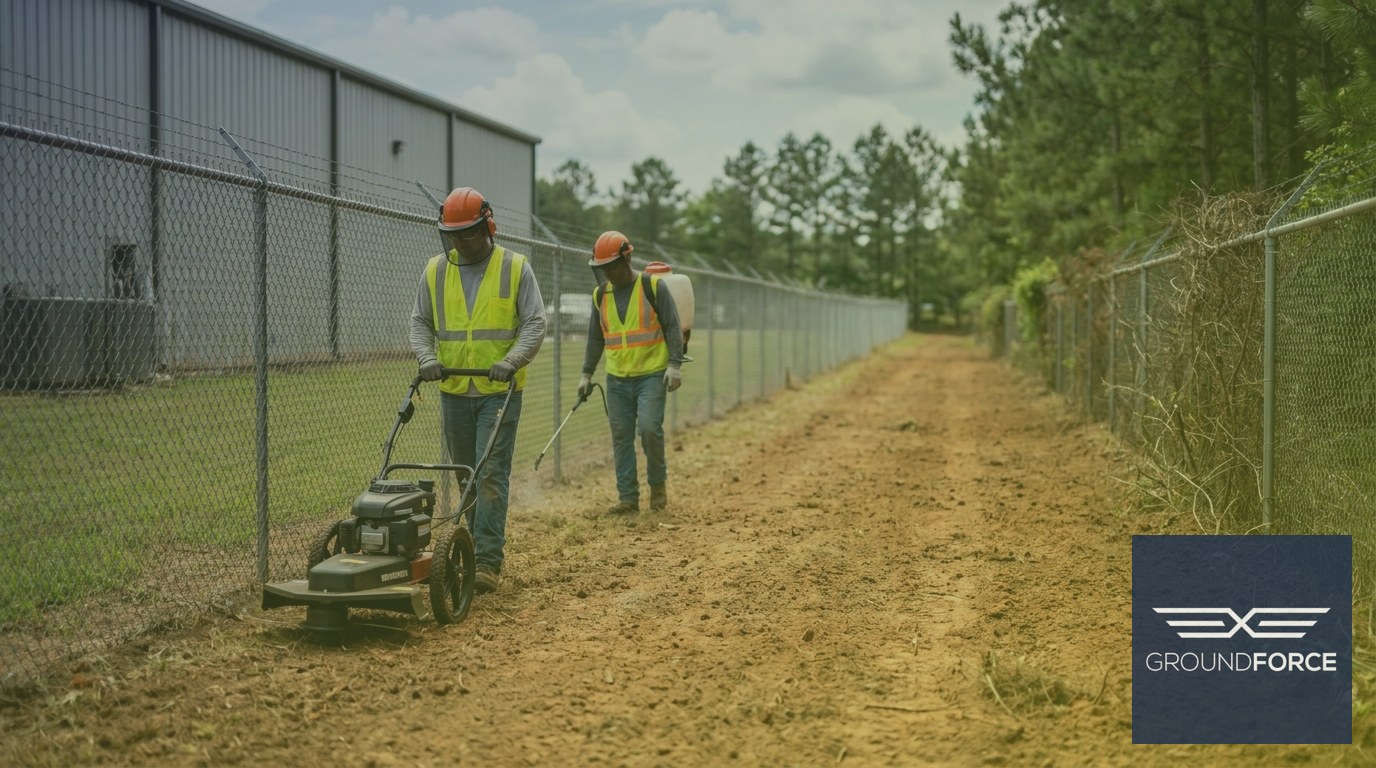
Fenceline work carries the tightest service frequency, because vegetation against a fence compromises sightlines and patrol access at automotive assembly plants, food processing facilities, and chemical manufacturing operations. Ground Force treats industrial perimeter clearing for site security as a distinct service item, sequenced ahead of interior zones. Ground Force crews mow and brush-cut internal access roads and equipment staging areas, and maintain a defined clearance strip around building perimeters.
Georgia’s humid subtropical climate overlaps cool-season and warm-season weed cycles at manufacturing sites more than in most U.S. states. A single annual or semi-annual clearance commonly fails, because spring annual broadleafs re-establish before crews address summer woody-shrub growth. Ground Force schedules staggered seasonal service visits matched to Georgia’s dual warm-season and cool-season weed growth cycles instead of a generic quarterly rotation.
Mechanical clearing carries most of the load: mowing, brush cutting, and grubbing remove biomass, while targeted herbicide application treats only the species and spots where cutting alone invites regrowth. Stormwater retention basins and drainage swales run on a separate schedule from fencelines, since heavy sedge and cattail growth can impair basin function and create NPDES permit complications when left unmanaged.
Ground Force positions vegetation control for manufacturing facilities as the primary service anchor, delivering industrial vegetation control in Georgia through plant control across Georgia industrial sites.
What compliance and safety standards drive vegetation management at manufacturing sites?
Industrial vegetation control programs must address OSHA walkway clearance requirements, NFPA fire-buffer recommendations, Georgia EPD herbicide-application rules, and facility-specific insurance carrier standards. Each framework converts vegetation from a cosmetic concern into a measured, documented obligation at Georgia manufacturing sites.

Under 29 CFR 1910.22, OSHA requires employers to keep walking-working surfaces free of hazards and to correct hazardous conditions before further use. OSHA also mandates free and unobstructed access to each exit route at all times, with no materials or equipment permitted along the route (OSHA, 1996). Vegetation that narrows an egress path or conceals a trip hazard violates both rules. The vegetation management compliance for industrial facilities covers these federal duties in detail.
Most facilities frame fire risk as clearing grass. The actual compliance trigger is defensible space: NFPA 30, which OSHA incorporates by reference (MSC Industrial Supply Co.), mandates separation of flammable liquids from incompatible materials by at least 20 feet or a partition and at least 25 feet from oxidizers. Insurers apply the same measured-buffer logic to vegetation around fuel storage tanks and chemical processing areas, so clearance must meet specific setback distances and generate records rather than merely look tidy. The Fire Risk Reduction Through Vegetation Management at Industrial Sites details those buffer calculations.
Herbicide application near stormwater features triggers state permitting. Georgia EPD’s NPDES General Pesticide Permit No. GAG820000 governs discharges from pesticide and herbicide use near or into state waters (Georgia EPD, 2021), and MS4 permits require applicators trained by the Georgia Department of Agriculture with documented program activities (Georgia EPD, 2017). The Georgia industrial vegetation control requirements explains how these permits apply to manufacturing properties.
A documented vegetation management plan supports facility audit readiness, insurance compliance, and contractor accountability at manufacturing sites. Clearance measurements, applicator credentials, and service logs give plant managers evidence during inspections and insurance renewals. The Vegetation Management Compliance for Georgia Industrial Facilities maps the standards behind regulatory compliance for industrial sites, and How to Create an Industrial Vegetation Management Plan in Georgia provides a step-by-step framework for replacing ad hoc clearance with a structured program.
Should manufacturing facilities use chemical or mechanical vegetation control?
Manufacturing facilities should use both, matched to zone risk and liability. Mechanical vegetation control is preferred over chemical methods near chemical storage, stormwater retention ponds, and food-grade production areas, while targeted herbicide application suits long fencelines and gravel yards where repeated mowing is cost-prohibitive.
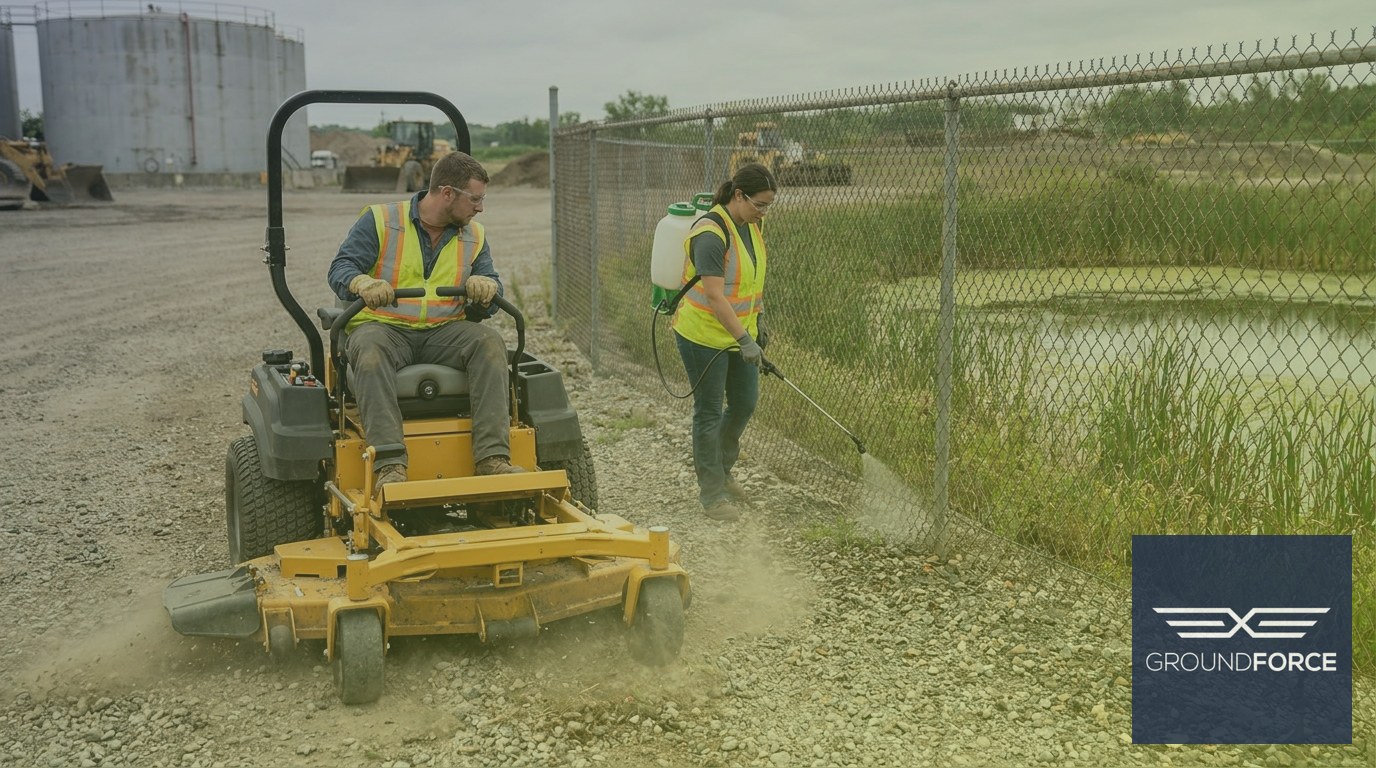
Mechanical vegetation control is preferred over chemical methods in zones adjacent to chemical storage, stormwater retention ponds, and food-grade manufacturing areas where herbicide drift or runoff poses contamination risk. Under the Georgia Environmental Protection Division’s Pesticide General Permit (2021), all operators must conduct visual spot checks during any pesticide application, and discharges must be minimized to the extent achievable. Mowing and cutting near water and chemical infrastructure removes that permit burden entirely.
The cost calculus reverses on long fenceline runs and gravel areas. A perimeter fence on a large manufacturing site can demand mowing crews every few weeks through the growing season, while targeted herbicide application controls fenceline vegetation with far fewer visits. Bareground treatments on gravel keep the surface inspection-ready without repeated equipment mobilization.
A zone-specific method map resolves the tradeoff. Single-method programs create either contamination risk or excessive cost: blanket herbicide use invites runoff liability, and blanket mowing inflates labor spend on acreage that rarely needs mowing. The choice between herbicide versus mowing at industrial facilities comes down to zone risk and visit frequency, and Ground Force compares both methods by plant zone in Chemical vs. Mechanical Vegetation Control at Industrial Sites while applying zone-by-zone method logic when building a Georgia industrial vegetation plan.