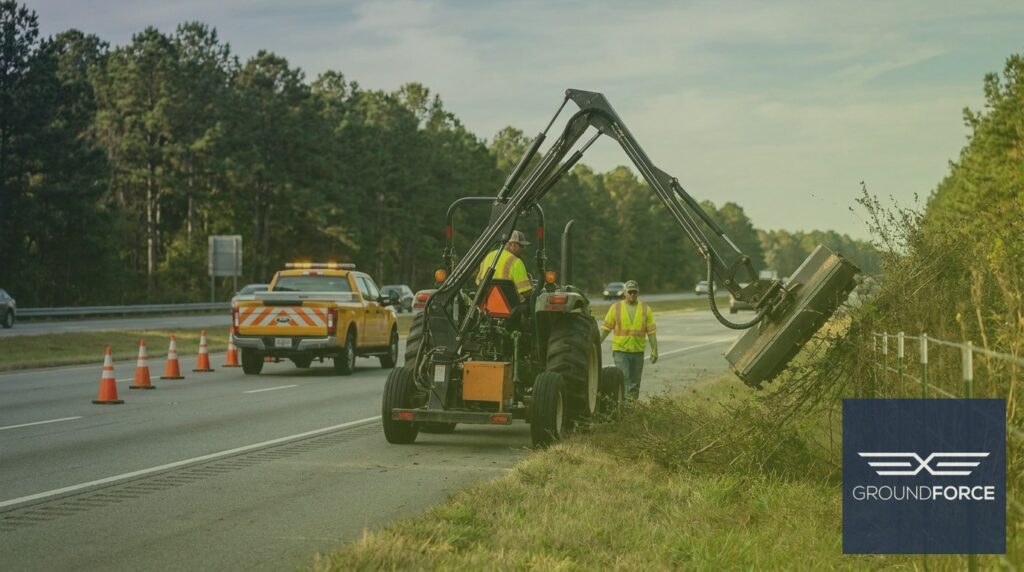
Roadside right-of-way vegetation management keeps Georgia’s highway corridors compliant and passable under GDOT specifications and FHWA guidelines. Georgia DOTs and municipalities face mounting pressure to keep roadside vegetation within specification, preserving sight distance and controlling invasive plants across thousands of lane miles. Ground Force delivers roadside right-of-way vegetation management programs purpose-built for Georgia transportation agencies, combining selective herbicide application, mechanical mowing, and invasive species control in one contract-ready solution.
What is roadside right-of-way vegetation management for Georgia DOTs and municipalities?
Roadside right-of-way vegetation management is the planned, systematic control of plant growth within the public road corridor, from the edge of pavement to the right-of-way boundary. Ground Force delivers these programs for Georgia DOTs and municipalities using GDOT-compliant, eco-friendly methods.

GDOT specifications and the Federal Highway Administration’s integrated vegetation management guidelines require roadside right-of-way vegetation management as a recurring obligation, not a one-time clearing event. Roadside vegetation management programs apply to interstates, US routes, state routes, county roads, and municipal street corridors across Georgia. The work changes character with each corridor type.
- Interstate shoulders: vegetation control preserves recovery zones, clear zones, and sign visibility along high-speed corridors.
- US and state route medians and slopes: management holds sight distance at intersections and keeps slope vegetation dense enough to resist erosion.
- County roads: mowing and brush control maintain narrow corridors where drainage ditches run close to the travel lane.
- Municipal street right-of-way: crews manage growth along curb lines, sidewalks, and utility strips inside city limits.
Georgia DOT roadside vegetation programs operate under GDOT specifications, which set mowing cycles, herbicide selection criteria, and vegetation height limits for state-maintained corridors. Municipal programs answer to local public works standards instead. The fieldwork looks similar. The paperwork does not: a city contract carries its own specifications, reporting expectations, and approval chain, separate from the state regulations for right-of-way vegetation that govern the state system.
Every roadside program pursues four objectives: safe sight distances, structural slope integrity, functioning drainage, and environmental compliance. Vegetation that blocks a driver’s view at an intersection, destabilizes a cut slope, or dams a drainage ditch converts a maintenance lapse into public liability. According to Georgia Forestry Commission guidance from 2020, managers must monitor sites that were recently disturbed or that border disturbed areas such as rights-of-way, roads, ditches, and stream sides. Mowing, grading, and construction disturb road corridors on a rolling basis, so invasive-species monitoring belongs inside every program cycle rather than after a failure.
Ground Force delivers roadside vegetation management Georgia DOTs and municipalities procure under GDOT-compliant programs, combining selective herbicide application, mechanical control, and the compliance documentation that state and local auditors require.
Why does roadside vegetation management matter for traffic safety and compliance in Georgia?
Uncontrolled roadside vegetation causes restricted sight distances, obscured signage, and increased crash risk on Georgia highways, which makes roadside vegetation management a core safety and compliance function for Georgia DOTs and municipalities. Neglected roadsides also produce MUTCD violations, slope and drainage failures, and federal funding exposure.
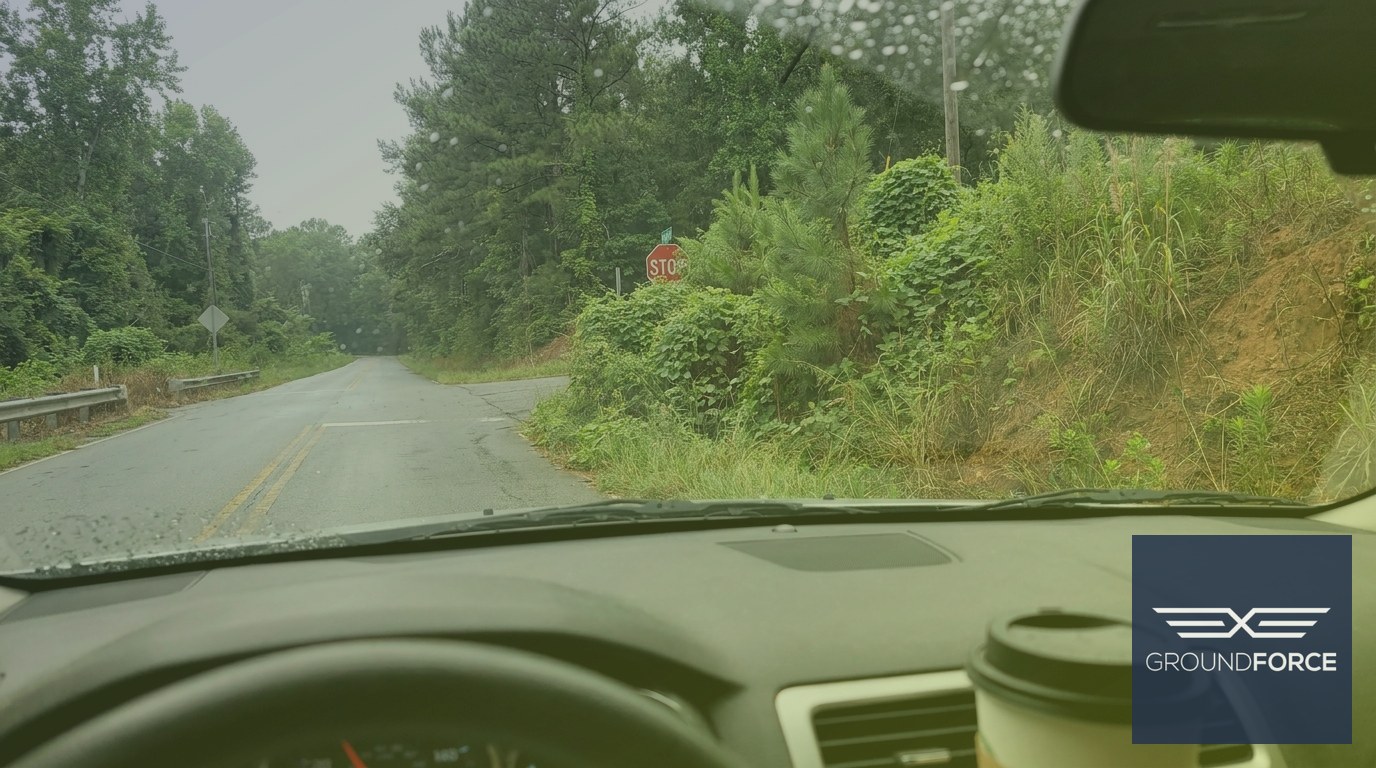
Sight distance fails first where drivers need it most: intersection corners, on-ramp merge points, and horizontal curves. Overgrown grass and brush at these locations hides crossing vehicles, pedestrians, and cyclists until a driver has no room left to brake. The vegetation clearing for driver sight lines covers the setbacks and clearing heights that keep these conflict points visible.
Vegetation encroachment that covers regulatory and warning signs creates direct MUTCD compliance violations. According to the Federal Register and FHWA (2023), the MUTCD is the national standard for traffic control devices used on all public roads, bikeways, or private roads open to public travel. Eastern Metal Signs and Safety identifies signs obscured behind vegetation as a common MUTCD compliance failure, so overgrowth functions as both a hazard and a documented audit finding.
The liability extends underground. Woody root systems loosen embankment soils, and dense brush blocks stormwater channels, which redirects runoff onto pavement and accelerates shoulder erosion. Each neglected cycle converts a routine mowing line item into infrastructure liability.
Federal rules turn these maintenance duties into funding conditions. Georgia transportation agencies must maintain roadsides under integrated vegetation management standards as a condition of federal highway funding, so FHWA and GDOT compliance protects both the traveling public and the agency’s budget.
What methods does Ground Force use for roadside vegetation management in Georgia?
Ground Force delivers roadside vegetation management through an integrated program built on selective herbicide application as the primary control tool, supported by mechanical mowing for residual height, seasonal treatment timing, and GPS-mapped environmental safeguards that align with GDOT specifications.
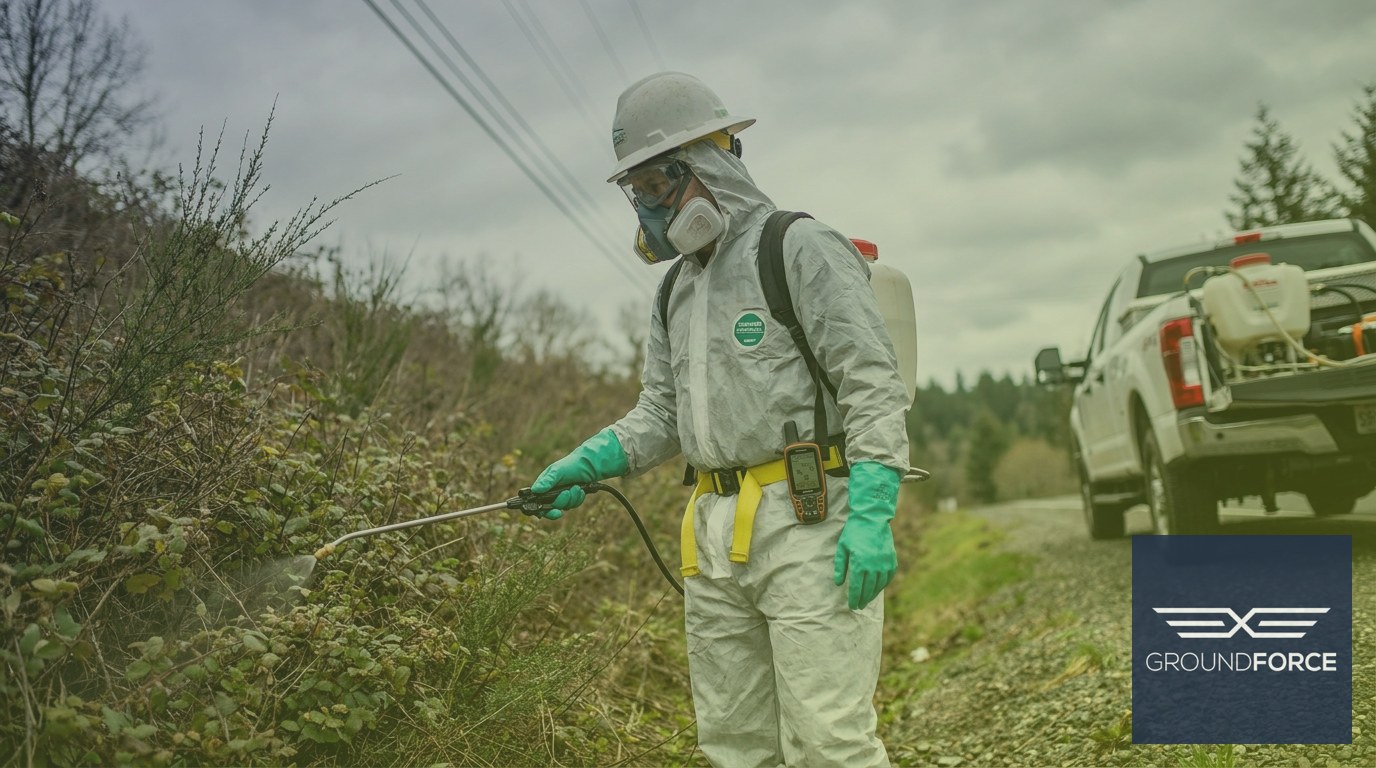
The program follows GDOT’s integrated vegetation management (IVM) framework, in which a selective herbicide program precedes mechanical mowing cycles in integrated Georgia roadside vegetation management. GDOT’s IVM framework explicitly requires contractors to prioritize selective control over blanket mowing, so a contractor who leads with a mowing-only bid is technically non-compliant with modern GDOT specifications. The mowing vs. herbicide cost-benefit analysis documents how herbicide-first sequencing lowers long-term treatment costs for agencies.
Selective application targets invasive and woody species while protecting desirable native ground cover on slopes, where low-growing vegetation stabilizes soil and limits erosion. The selective vegetation control on Georgia roadways explains how targeted chemistry preserves native slope communities instead of stripping corridors with broadcast treatment.
Seasonal timing drives the treatment calendar. Fall timing optimizes herbicide efficacy for woody invasive and broadleaf control in Georgia ROW programs, because woody plants move carbohydrates into their root systems before dormancy and carry the herbicide into the root zone. Spring mowing cycles then manage cool-season growth before seed heads mature.
GDOT maintenance contracts often include mowing frequency minimums, such as two cuts per season on primary routes, that operate alongside herbicide programs rather than replacing them. Ground Force coordinates both schedules within a single contract scope.
Ground Force builds environmental safeguards into every program: pollinator buffer zones, wetland setback compliance, and GPS-mapped treatment records formatted for agency reporting. Agencies can integrate pollinator habitat initiatives, encouraged by the Federal Highway Administration, into Georgia ROW programs by designating no-mow buffer strips in lower-traffic areas, and Ground Force maps each strip for agency verification.
Which invasive plants are priority targets in Georgia roadside vegetation management?
Kudzu and cogongrass are priority targets in Georgia DOT invasive species control programs along highway corridors, and Chinese privet joins them for its colonization of roadside ditches and drainage easements. Each species demands a herbicide-first strategy matched to its growth habit.
Kudzu is a climbing deciduous vine that, according to UGA Cooperative Extension, forms a blanket of green consuming trees, fields, and buildings. Along Georgia interstates and rural highways, kudzu smothers signage, guardrails, and sight-line zones, and suppression requires multi-season herbicide programs rather than one-pass applications.
Cogongrass carries a sharper risk. Georgia DOT highway invasive species priority control programs classify cogongrass as a priority invasive. The Georgia Forestry Commission reports that cogongrass forms dense, extremely flammable mats and warns that mowing or disking spreads seed and root fragments, making chemical eradication the recommended response. Mowing alone also worsens the fire hazard itself, because cut cogongrass cures into fine, dry fuel; USDA APHIS documented in 2019 that cogongrass fires along highways produce excessive smoke and limited visibility for drivers. Herbicide-first treatment is the only compliant and safe approach for cogongrass along Georgia roadsides.
Chinese privet colonizes roadside ditches and drainage easements, where dense thickets block flow and threaten slope stability. The Georgia Department of Natural Resources classifies privet as a high priority for invasive species management, and the USDA Forest Service counts privet among the most widely invasive plants in the South.
Privet control in drainage ditches requires different herbicide chemistry than upland kudzu treatment, a boundary the ecological impacts of roadside herbicide use make explicit. Upland kudzu programs typically rely on triclopyr or clopyralid, while ditch-line privet requires aquatic-labeled glyphosate formulations. Applying one product across both micro-habitats is a common contractor error that produces poor results and risks permit violations near waterways.
Ground Force closes every treatment cycle with post-treatment photographic and GPS documentation, the record format GDOT requires for invasive species reporting.
How do Georgia DOTs and municipalities contract for roadside vegetation management services?
Georgia DOTs contract roadside vegetation management through state procurement governed by GDOT Standard Specifications, while municipalities fund programs through LMIG grants or general fund budgets using local invitation-to-bid. Ground Force tailors proposals to each path’s funding mechanism and compliance documentation requirements.
1. GDOT bid packages. The Georgia Department of Transportation requires all vegetation management proposed on GDOT right-of-way to conform to GDOT Standard Specifications, the Georgia Erosion and Sedimentation Act, and GDOT policies. Contractors must hold pesticide applicator licensing, maintain equipment certification, and document an Integrated Vegetation Management plan. The Georgia DOT contractor vegetation standards detail these qualification requirements for state right-of-way work.
2. Municipal invitation-to-bid. Municipal programs draw on different funding, typically Local Maintenance and Improvement Grant (LMIG) allocations or general fund budgets. The municipal vegetation contract procurement process runs through local invitation-to-bid rather than state prequalification, which changes bid timing, contract structure, and the compliance documentation the municipality requests.
3. Proposal structuring by client type. Ground Force builds DOT bid packages and municipal public works RFP responses separately. A GDOT package leads with Standard Specifications conformance and IVM plan documentation; a municipal response leads with the funding schedule and local reporting formats. The differing compliance documentation requirements, not only the funding source, drive this structural split.
4. Contract deliverables. Every Ground Force contract produces the same documentation set: treatment logs, GPS application records, before and after photo documentation, and pesticide application reports.
Sources
- Georgia Forestry Commission, “Cogongrass in Georgia”
- Georgia Forestry Commission, “COGONGRASS: IF YOU SEE IT, REPORT IT!”
- Georgia Department of Natural Resources, “Watch What You Plant” (2015)
- UGA Cooperative Extension, “An Invasive Issue”
- Georgia Forestry Commission, “Invasive Plants of Georgia’s Forests” (2020)
- Eastern Metal Signs and Safety, “MUTCD Work Zone Standards: Temporary Traffic Control Guide”
- Georgia Department of Transportation, “Policy: 6170-1 – Vegetation Management at Outdoor Advertising Signs”