
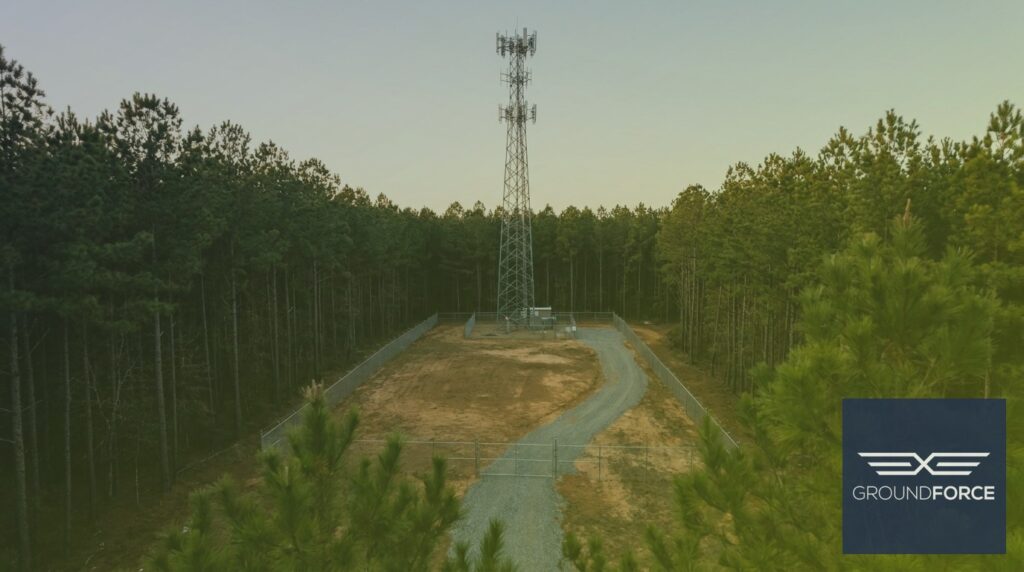
Cell tower vegetation management is the specialized practice of controlling growth around tower bases, access roads, and compound perimeters to preserve site access, personnel safety, and regulatory compliance for wireless infrastructure operators. Georgia’s long growing season drives aggressive vegetation that blocks access roads, compromises security fencing, and creates compliance exposure at tower sites. Ground Force delivers commercial-grade vegetation management programs that keep Georgia tower compounds clear, accessible, and inspection-ready year-round.
What does cell tower vegetation management involve?
Cell tower vegetation management is the scheduled mechanical and chemical control of plant growth across three site zones: the tower base, the compound perimeter, and the access road corridor. The practice preserves technician access, personnel safety, and regulatory compliance for wireless infrastructure sites in Georgia.
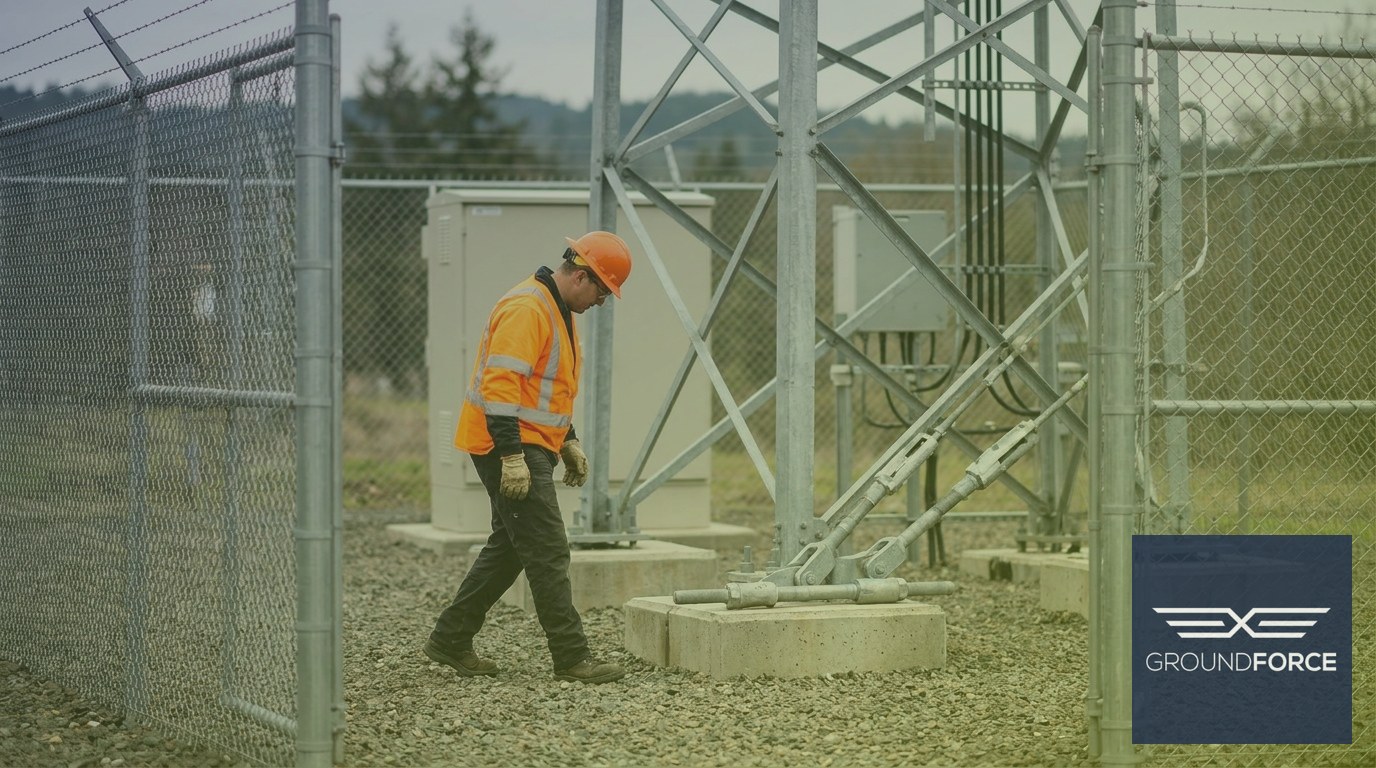
Cell tower vegetation management applies to three distinct site zones, and each zone carries its own clearance standard. Tower base clearance keeps the equipment pad, guy anchors, and grounding system visible and inspectable. Compound perimeter work keeps fence lines free of growth that traps moisture and conceals intrusion. Access road corridor clearing keeps the route drivable for service vehicles and emergency responders. The cell tower site vegetation access specifications document the clearance dimensions each zone requires.
Tower sites accumulate vegetation faster than open land for structural reasons. Construction disturbs the soil, and the University of Georgia Cooperative Extension reported in 2021 that many invasive plants thrive in disturbed habitat; the same program noted in 2023 that land disturbance breaks the ecological balance and drives plant proliferation. Perimeter fencing blocks mowers and grazing animals, and limited foot traffic leaves seedlings untouched. A fenced compound on disturbed soil functions as a nursery.
Overgrown vegetation on Georgia tower sites is caused by the state’s warm, humid climate, which produces year-round aggressive plant growth including kudzu, privet, and bramble. Kudzu grows one foot per day once established, with mature vines reaching 100 feet, according to The Nature Conservancy; the New Georgia Encyclopedia reported 60 to 100 feet of growth per season in 2022. Chinese privet thickens along fence lines, saw palmetto resists cutting on coastal plain sites, and volunteer tree growth returns cleared ground to sapling stands within a few seasons.
Service methods match the zone and the species. Mechanical clearing removes heavy woody growth along road corridors, while brush cutting maintains base and perimeter zones between chemical cycles. Selective herbicide suppresses invasives while preserving stabilizing groundcover; non-selective herbicide keeps gravel pads and fence lines bare. Vegetation also affects signal performance as a secondary concern: dense canopy growing into antenna line-of-sight paths degrades propagation, so crown reduction around taller towers appears in some management scopes.
Georgia’s invasive species re-establish at rates that make annual-only programs insufficient. Sites in the Georgia Piedmont and coastal plain require a minimum of two treatment cycles per year, a detail generic vegetation management vendors without telecom experience routinely underestimate in their scopes. Continuous seasonal tower site vegetation needs follow plant biology rather than a fixed calendar, and the year-round control framework translates those growth rates into a treatment schedule.
How is vegetation controlled on cell tower access roads?
Crews control vegetation on cell tower access roads through overhead canopy trimming, selective herbicide treatment along road edges, and surface grading where ruts form, because unpaved tower roads require root-level control and vertical clearance that routine site mowing never provides. Access road vegetation control is a critical operational requirement for remote tower sites unreachable by standard maintenance crews without cleared roadways.
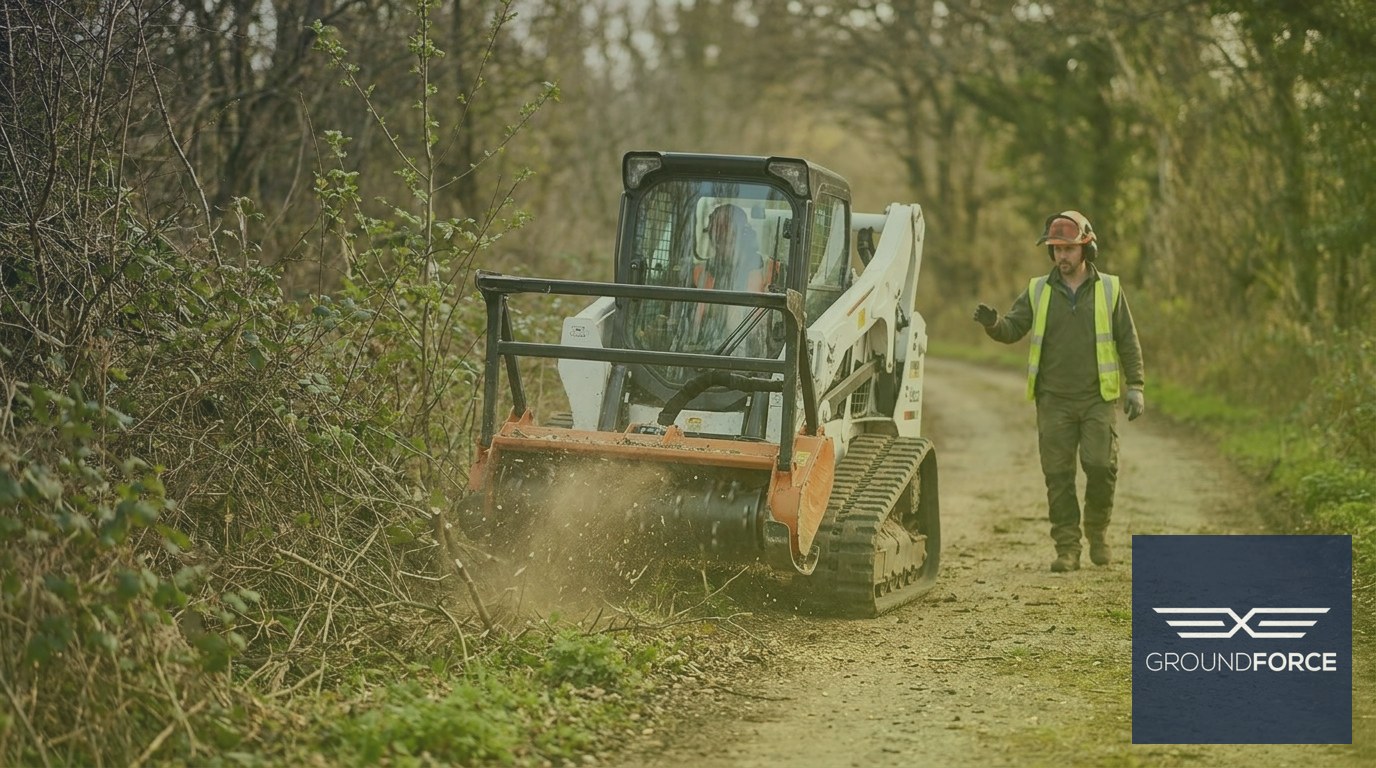
Mowing alone does not control access road vegetation. A mower cuts growth at the surface and leaves root systems intact; on gravel or dirt roads, repeated vehicle passes over soft regrowth carve ruts that block vehicle access within one growing season. Herbicide edge treatment and canopy trimming address the roots and the overhead corridor that mowing misses. Crews keep treated road sections passable between visits by regrading ruts and verifying drainage.
Blocked access roads carry operational consequences. Overgrown roads delay routine maintenance visits, cause failed safety inspections, and prevent emergency crews from reaching tower equipment during outages.
Georgia timing matters because the growing season runs long and aggressive species target roadsides. Kudzu establishes dense mats along the sunny sides of roads, according to the New Georgia Encyclopedia (2022), and mimosa trees readily establish in disturbed soil and along roadsides, per University of Georgia Cooperative Extension (Forsyth County, 2024). Programs schedule herbicide applications early in the season and repeat canopy trimming before late-summer growth peaks.
Operators planning tower access road vegetation programs can find Georgia treatment schedules, herbicide selection, and inspection intervals for unpaved tower roads in Vegetation Control Programs for Tower Access Roads in Georgia.
What herbicide programs are used to keep tower compound perimeters clear?
Tower operators use compound perimeter herbicide programs to maintain vegetation-free buffer zones for extended periods between service visits. Each program pairs a non-selective knockdown herbicide with a residual pre-emergent herbicide, and the residual layer suppresses regrowth for three to six months.
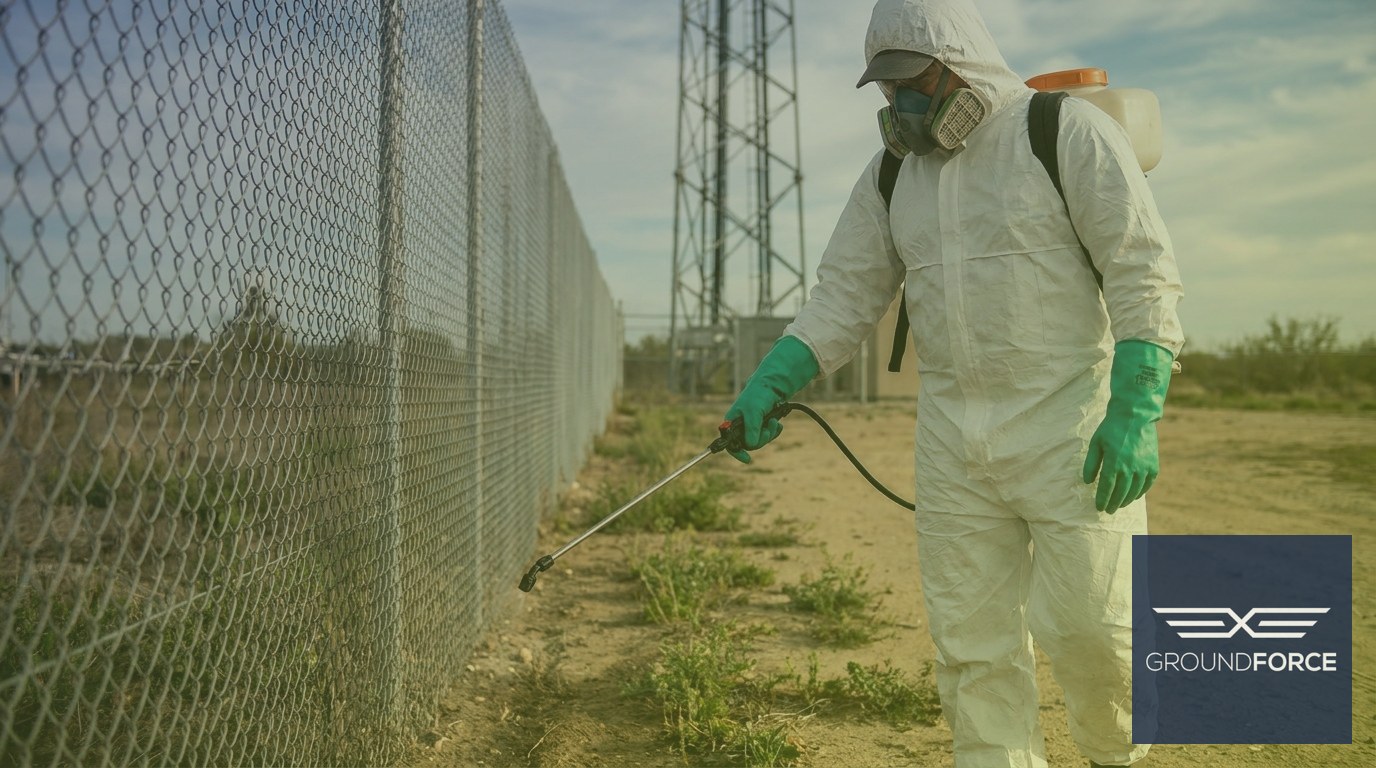
Initial knockdown targets vegetation already established inside the fence. Crews apply a non-selective herbicide such as glyphosate to actively growing foliage, and the chemistry translocates into the root system so perennial species die instead of resprouting from the crown. Established invasives make that kill step non-negotiable: a 2023 University of Georgia Cooperative Extension report notes that non-native privet has held first place on the Georgia Forestry Commission’s Dirty Dozen List since 2009 and occupies nearly 717,000 acres of Georgia forest lands.
Residual control carries the program between visits. A pre-emergent herbicide binds in the upper soil layer and kills germinating seedlings before they emerge, holding bare ground for three to six months. Gravel pads do not change that schedule. Weed pressure pushes through stone aggregate throughout Georgia’s long warm season, so gravel compounds receive residual applications on the same interval as vegetated fence lines.
Application timing follows Georgia’s growing season. Crews apply residual treatments in late winter or early spring, ahead of the first germination flush, so the soil barrier reaches full strength before warm-season weeds emerge; a late-summer pass extends control into fall. Herbicide Programs for Cell Tower Compound Perimeters details tank-mix selection, rate ranges, and re-treatment intervals for herbicide programs for tower perimeters at Georgia tower sites.
How does unmanaged vegetation create security risks at cell tower sites?
Unmanaged tower site vegetation causes security vulnerabilities including concealment of unauthorized access, fence compromise, and theft of copper grounding equipment. Overgrowth blocks sightlines along fences and access roads, hides breaches from inspection crews, and shelters intruders at sites that operate without on-site personnel.
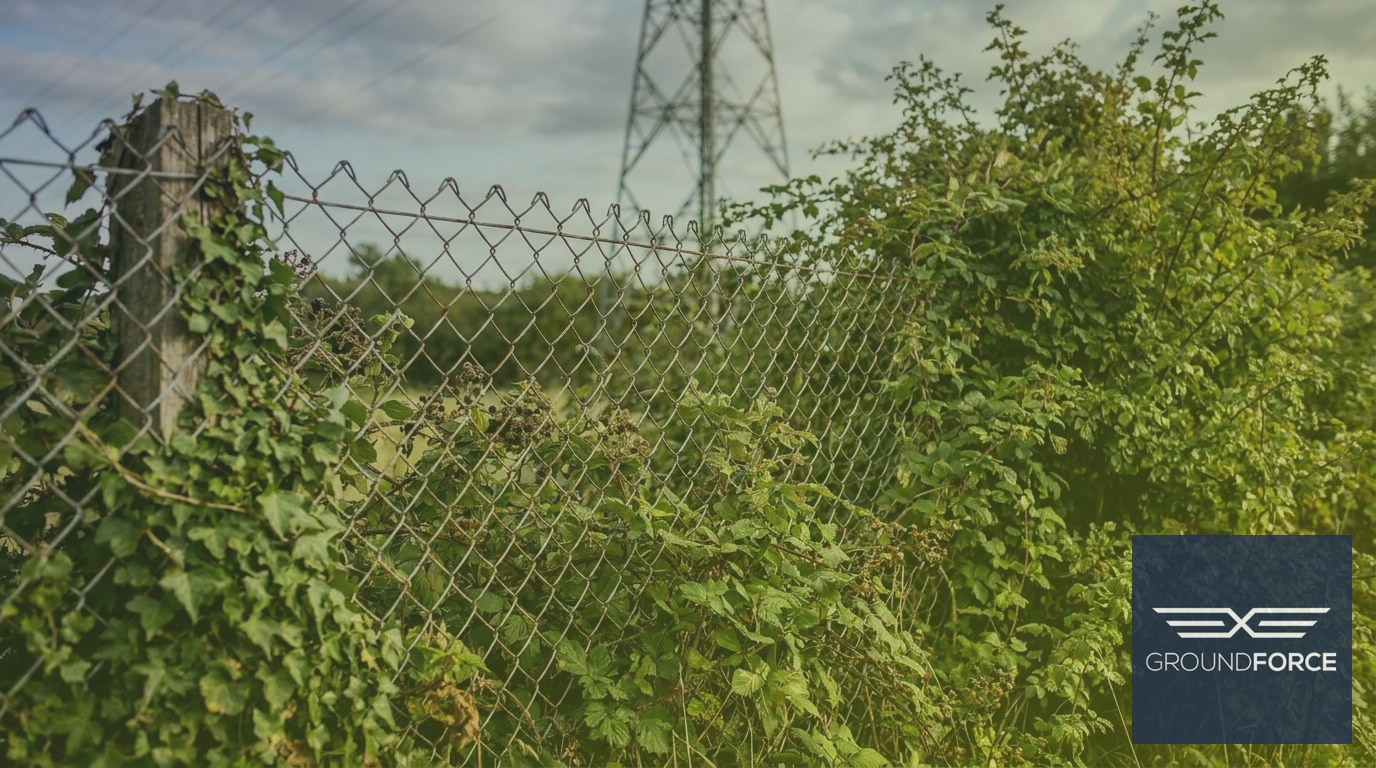
The risk mechanisms follow a predictable sequence:
1. Concealed perimeter breaches. Vegetation pressing against fence fabric hides cut links, lifted sections, and digging from passing inspection crews. Mississippi State University Extension Service describes Chinese privet, a common Georgia roadside invader, as forming very dense canopies with densely foliated branches, which makes privet a major visibility obstruction along tower compound fence lines.
2. Cover for theft at unmanned compounds. Senstar reported in 2025 that copper cables, batteries, generators, on-site tools, and diesel fuel at cell tower sites are frequently targeted for theft and resale, with unmanned and remote sites carrying the highest exposure. Inside Towers reported in 2024 that rising copper market value is driving this theft across cellular towers and other infrastructure categories. Dense brush adjacent to the compound gives a thief working time while screening the work from the road.
3. Failure of carrier visibility standards. Many carrier security standards document clear perimeter visibility as an explicit requirement, treating perimeter brush control around secure installations as a baseline condition of site compliance. An overgrown compound fails those audits and shifts liability onto the operator.
Security and Vegetation Management: How Overgrowth Compromises Tower Sites details how overgrowth hides tower intrusion risks and provides the sightline measurements and inspection intervals that detect concealed intrusion before equipment loss occurs.
How does a cell tower vegetation management program support compliance and contract requirements?
A tower site vegetation management program contains the defined service specifications, treatment frequencies, and inspection documentation required for carrier and ground lease compliance, and the program’s dated service records function as auditable evidence of compliance during site audits and lease renewals.
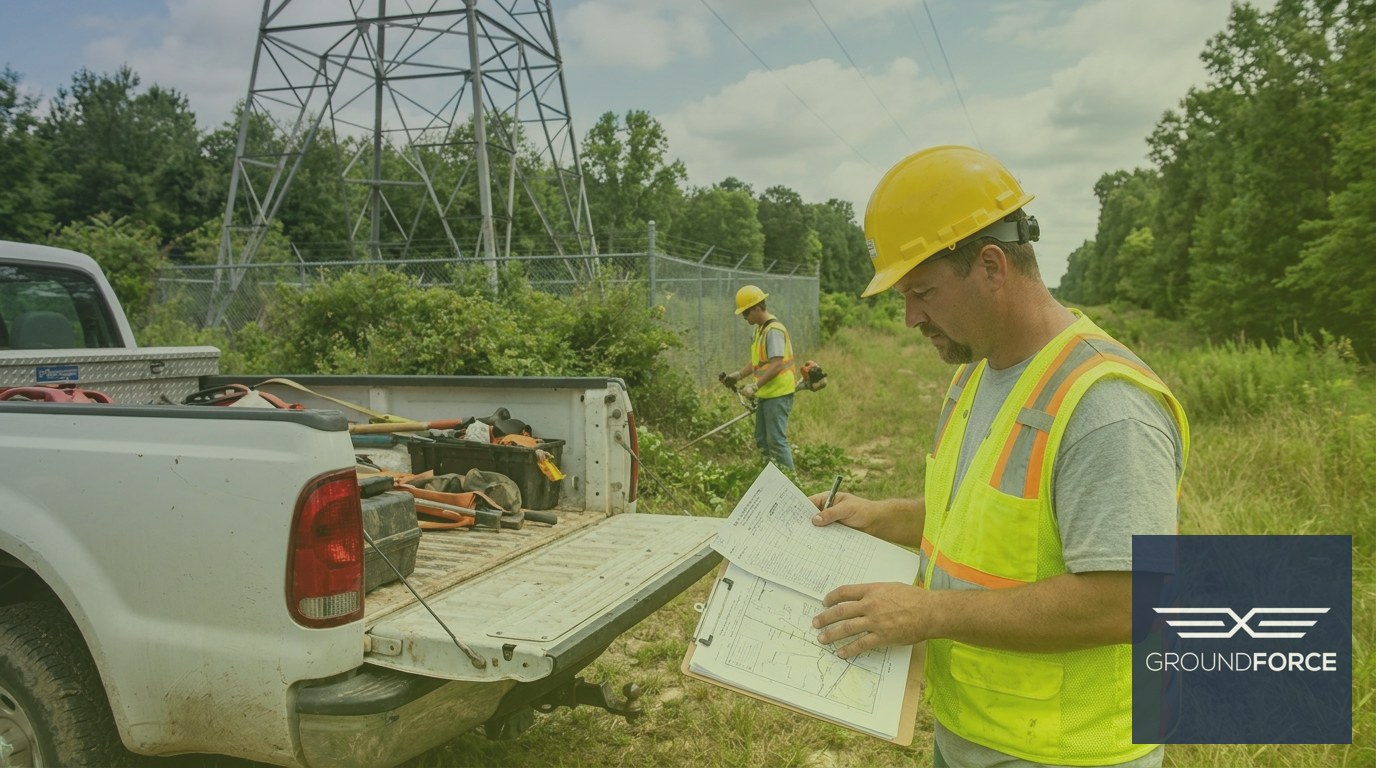
No universal clearance standard exists for tower sites. Neither the FCC nor standard tower leases mandate vegetation-free buffer widths. Individual ground lease agreements and carrier master lease addenda define the exact buffer widths and inspection protocols for each site. A telecommunications network operator who treats compliance as a generic “keep it mowed” obligation risks lease default without recognizing the exposure.
Documented service records convert routine maintenance into legal evidence. Each visit should log the date, treatment method, and treated zone so the operator can produce a compliance trail on demand.
A vendor contract holds up only when the vegetation specification is measurable. When writing a tower vegetation specification document, include four elements:
1. Buffer widths stated in feet from the tower base, compound fence, and access road, matching the lease language exactly. 2. Treatment frequencies and methods per zone, including invasive plant monitoring along roads, ditches, and stream sides, which a 2020 Georgia Forestry Association publication identifies as priority infestation zones near disturbed ground. 3. Documentation deliverables, meaning dated service logs, treated-zone maps, and photo records delivered after every visit. 4. A verification method, such as scheduled joint inspections, so operations managers can verify reported work in the field.
Evaluating a vendor’s submitted specification requires a separate analytical pass. The tower operations manager scores each submission against the same four elements, flags unmeasurable language such as “as needed” scheduling or buffer widths quoted without reference to the lease, and compares competing bids element by element to separate measurable commitments from vague effort. Tower operations managers should reject any vendor specification that promises “regular maintenance” without these measurable terms.
Operators building a specification from scratch can consult how to create a tower site vegetation management specification for drafting templates and sample clause language. Compliance-grade documentation affects pricing, and the 2026 telecom tower vegetation management costs guide breaks down how buffer width, treatment frequency, and reporting depth shape pricing across Georgia tower sites.
Multi-site operators should separate site-level compliance, which follows individual lease terms, from portfolio-level consistency, which depends on coordinated vegetation across tower portfolios.
Tower operators and wireless carriers managing Georgia cell sites use Ground Force for consistent, documented vegetation control.
Sources
- New Georgia Encyclopedia, “Kudzu” (2022)
- The Nature Conservancy, “Kudzu: The Invasive Vine that Ate the South”
- Mississippi State University Extension Service, “Chinese Privet”
- Senstar, “Securing Cell Towers: Reduce Risk, Cut Costs” (2025)
- Inside Towers, “Telecom Industry Bands Together to Fight Rising Theft and Vandalism of Communications Infrastructure” (2024)