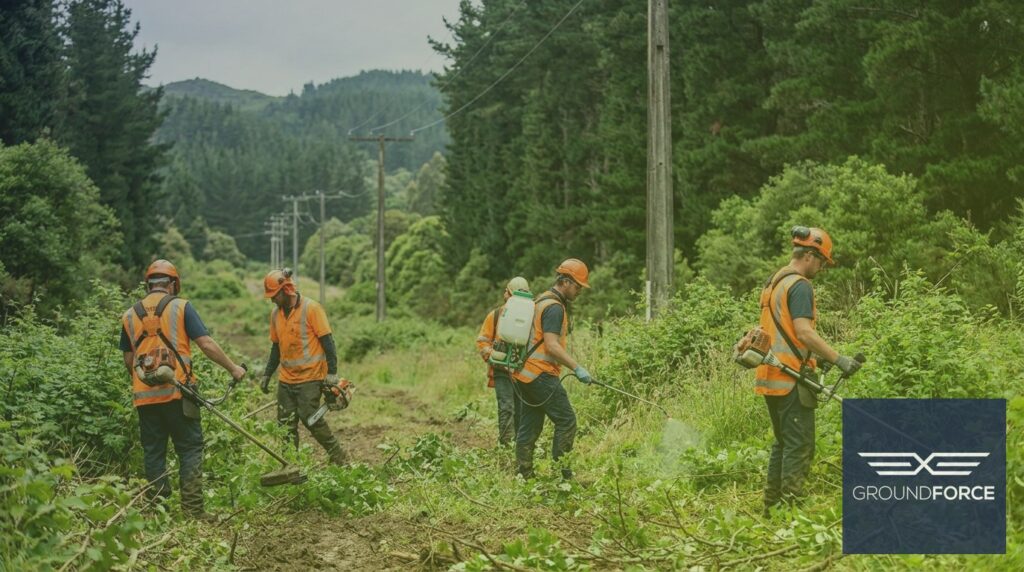
Ground Force, a family-owned commercial vegetation management company headquartered in Georgia, provides eco-friendly vegetation management for commercial, industrial, municipal, and utility clients across the Southeast. Ground Force applies science-based, environmentally responsible methods to every site, from herbicide selection to habitat-aware application timing. Ground Force plans each site around vegetation control requirements and habitat conditions. Ground Force builds its training, safety standards, and client relationships around the same vegetation control and habitat priorities.
Who is Ground Force, and what is the company’s founding story?
Ground Force is a family-owned commercial vegetation management company based in Georgia. Ground Force was founded to give Georgia’s commercial, industrial, and municipal land managers a science-based, environmentally responsible alternative to national contractors, and the company’s founding mission centers on environmentally responsible vegetation management across Georgia and the Southeast.
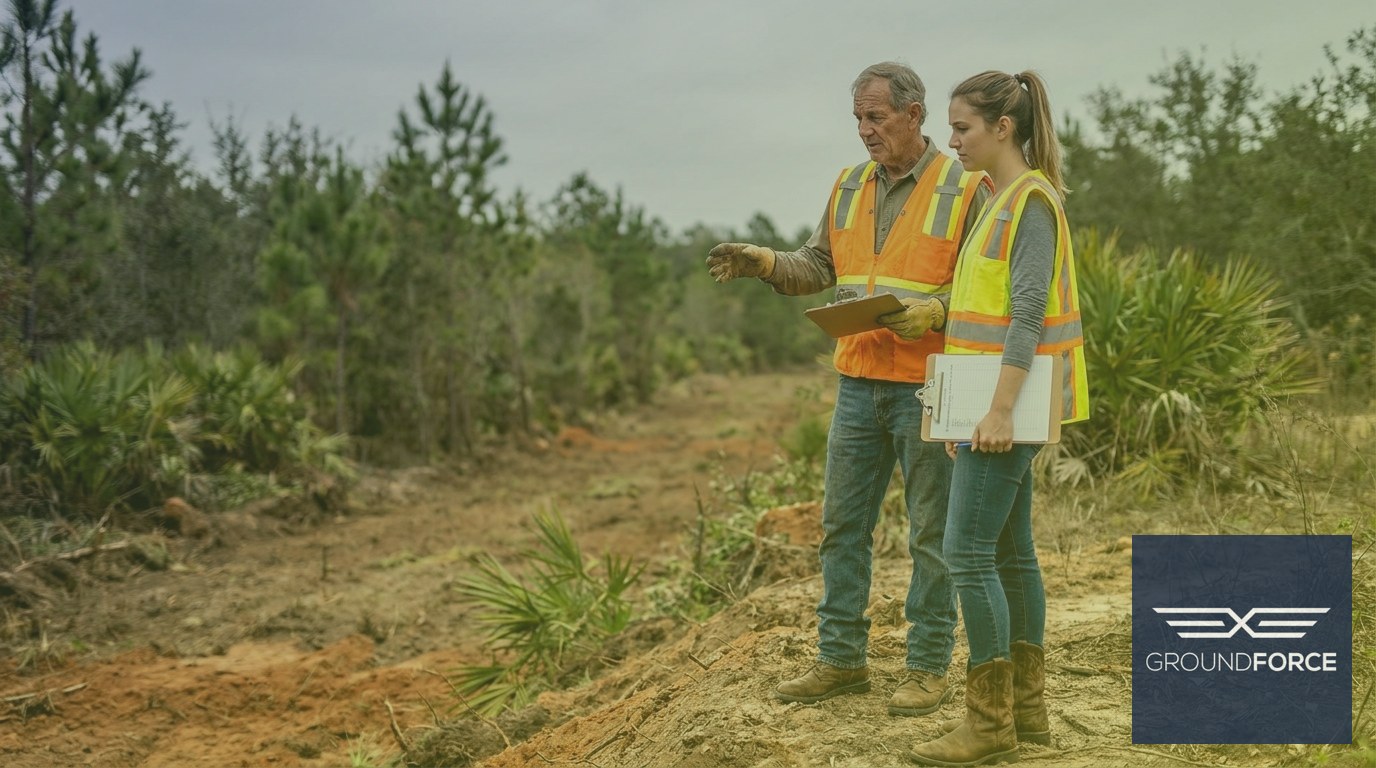
Ground Force was founded to close a specific gap in Georgia’s commercial vegetation management market. National contractors dominated large contracts but relied on broadcast chemical applications and rotating crews, while small local operators lacked the equipment and licensing to service industrial sites, utility corridors, and municipal properties. Ground Force was built to occupy that middle ground: a regional company applying integrated, science-based vegetation control methods matched to Georgia’s long growing season, heavy rainfall, and aggressive invasive species such as kudzu and Chinese privet.
Family ownership shapes how Ground Force operates day to day. Clients reach owners and senior managers directly instead of routing requests through corporate approval layers, and the people who sign a contract stay accountable for results on the ground. Every long-term client works with consistent named contacts rather than rotating account managers assigned from a national call center. That continuity carries a distinct operational value for infrastructure and utility clients: a named Ground Force contact builds institutional knowledge of a site across seasons, including herbicide rotation history, regrowth patterns, and sensitive buffer zones, and that accumulated knowledge disappears when a national provider reassigns the account.
Family-owned does not mean small-scale. Ground Force pairs the accountability and relationship continuity of a family business with the operating capacity of a regional commercial contractor: the company fields commercial-grade spray and mowing equipment, staffs state-certified pesticide applicators, and services contracts across Georgia and the Southeast. Family ownership does not limit Ground Force’s operating capacity. The family structure governs who answers to the client, not how much work the company can perform.
The geographic focus is a deliberate strategic and values-driven choice. The Ground Force company overview and mission defines Georgia and the Southeast as the company’s permanent service territory, not a launchpad for national expansion. Regional concentration keeps crews, equipment, and vegetation expertise focused on the soils, climate, and invasive-species pressures of one region, and that focus reflects the founding values of local accountability and environmental stewardship of Southeastern land.
What Makes Ground Force’s Approach to Vegetation Management Science-Based and Eco-Friendly?
Ground Force applies science-based, eco-friendly methodology to every vegetation management treatment decision. Integrated Pest Management principles guide the company to select the least environmentally disruptive effective method, protecting native plants, non-target species, soil, and water on commercial properties across Georgia.
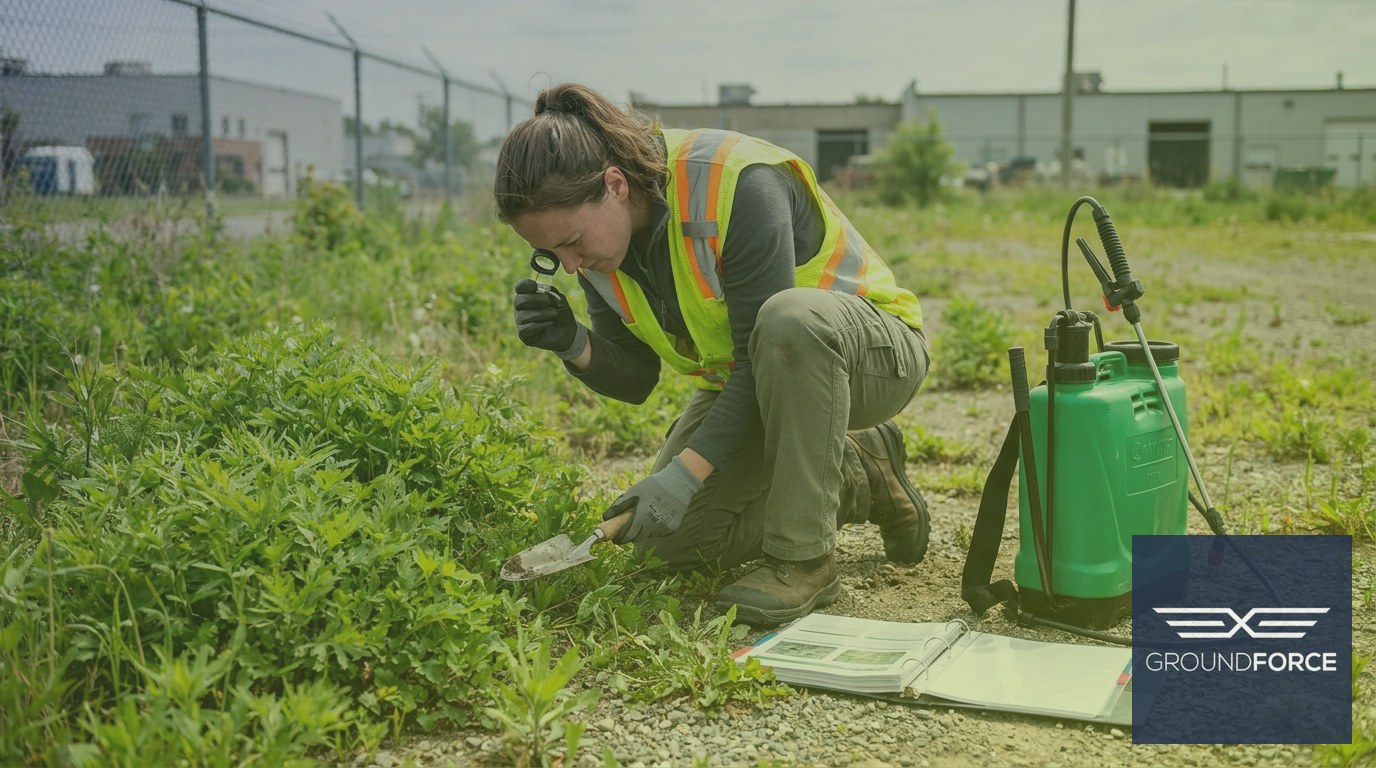
Integrated Pest Management (IPM) guides every treatment choice Ground Force makes; applied to commercial land care, the discipline operates as Integrated Vegetation Management (IVM). Technicians monitor sites, identify target species, and act only when pest pressure crosses an action threshold, applying the least-disruptive effective control first. The IPM standard also separates science-based eco-friendly management from organic-only or chemical-free marketing: Ground Force keeps every method category available, because a targeted herbicide application often disturbs less soil and fewer non-target plants than repeated mechanical clearing. The science-based IVM methodology explained page details each decision step from monitoring through control selection.
Operationally, eco-friendly at Ground Force means native plant protection, non-target species avoidance, and soil and water stewardship. Crews buffer applications near waterways and storm drains, time treatments around pollinator activity, and preserve desirable native grasses while removing invasive growth. The eco-friendly IVM methodology overview documents these protocols by property type.
The science-based approach produces measurable business outcomes alongside environmental benefits. Properties managed with IPM experience fewer repeat infestations, so treatment volume and annual vegetation budgets decline over time. Controlled vegetation protects pavement, fencing, signage, and drainage structures from root and overgrowth damage, cutting capital repair costs and reducing liability from fire hazards and blocked sightlines. The eco-friendly land care property advantages resource covers these outcomes in detail.
Ground Force’s eco-friendly approach is a documented operating practice. The methodology is operationally embedded in treatment selection, product choice, and site stewardship protocols. Every decision leaves a record. Site assessments, treatment logs, and follow-up monitoring give property managers documentation they can present to regulators, permitting authorities, and stormwater compliance inspectors.
What certifications, licenses, and safety standards does Ground Force operate under?
Ground Force holds professional certifications and licensing required for commercial vegetation management operations in Georgia, including Georgia Department of Agriculture Commercial Pesticide Applicator credentials in the right-of-way and aquatic pest control categories. Ground Force safety standards cover crew members, client site personnel, surrounding ecosystems, and non-target species.
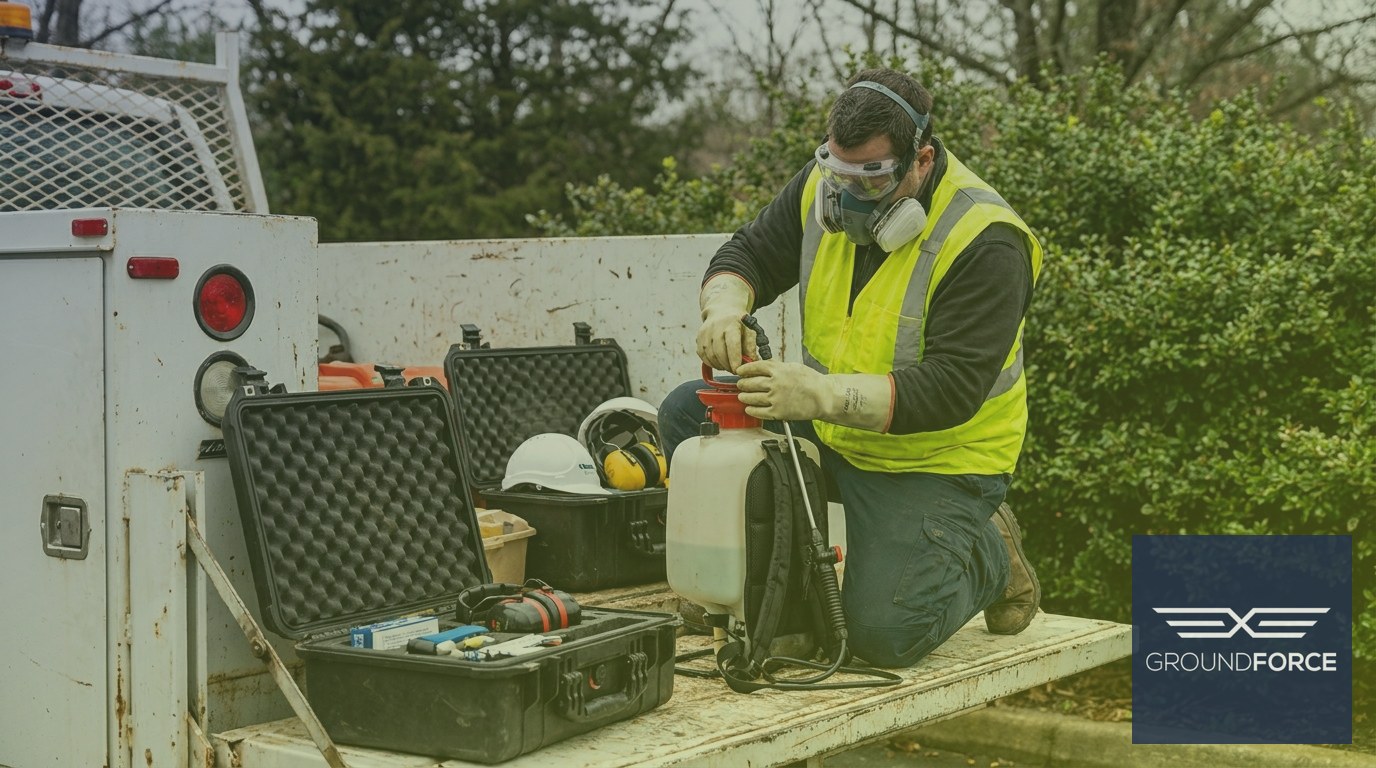
Georgia requires any business applying pesticides for hire to operate under a Pesticide Contractor License, and each applicator must pass state certification exams in the categories matching the work performed. The right-of-way category covers roadside, railroad, and utility corridor vegetation control. The aquatic category authorizes treatments in and around ponds, drainage ditches, and waterways.
Before vegetation work starts on industrial sites, utility corridors, and municipal property, Ground Force crews complete a site hazard analysis, follow OSHA safety standards, and use protective equipment matched to each task. Applicators apply every herbicide under its EPA-approved product label, which sets legally binding rates, buffer distances, and weather limits for each treatment.
Waterway and non-target protection shapes every application plan. Applicators maintain buffer zones around streams and wetlands, use drift-reduction spray equipment, and select herbicides that control invasive and woody species while sparing grasses and pollinator habitat. Crews postpone treatments when wind speeds rise or rain is forecast, which prevents runoff into waterways.
These credentials document that Ground Force meets the Georgia licensing and certification requirements for businesses applying pesticides for hire. The Georgia vegetation company buyer’s checklist lists the license documents and safety records procurement officers should request before awarding a contract.
For regulated facilities such as utilities, airports, and DOTs, Ground Force can submit its certifications and documented safety protocols directly to compliance and procurement officers as part of vendor qualification packages.
Which industries and clients does Ground Force serve across Georgia?
Ground Force serves commercial, industrial, municipal, and utility clients across Georgia and the Southeast. The client base spans commercial and industrial properties, utility providers, municipalities, telecom operators, airports, and rights-of-way owners, with coverage centered on metro Atlanta, northeast Georgia, and the broader piedmont region.
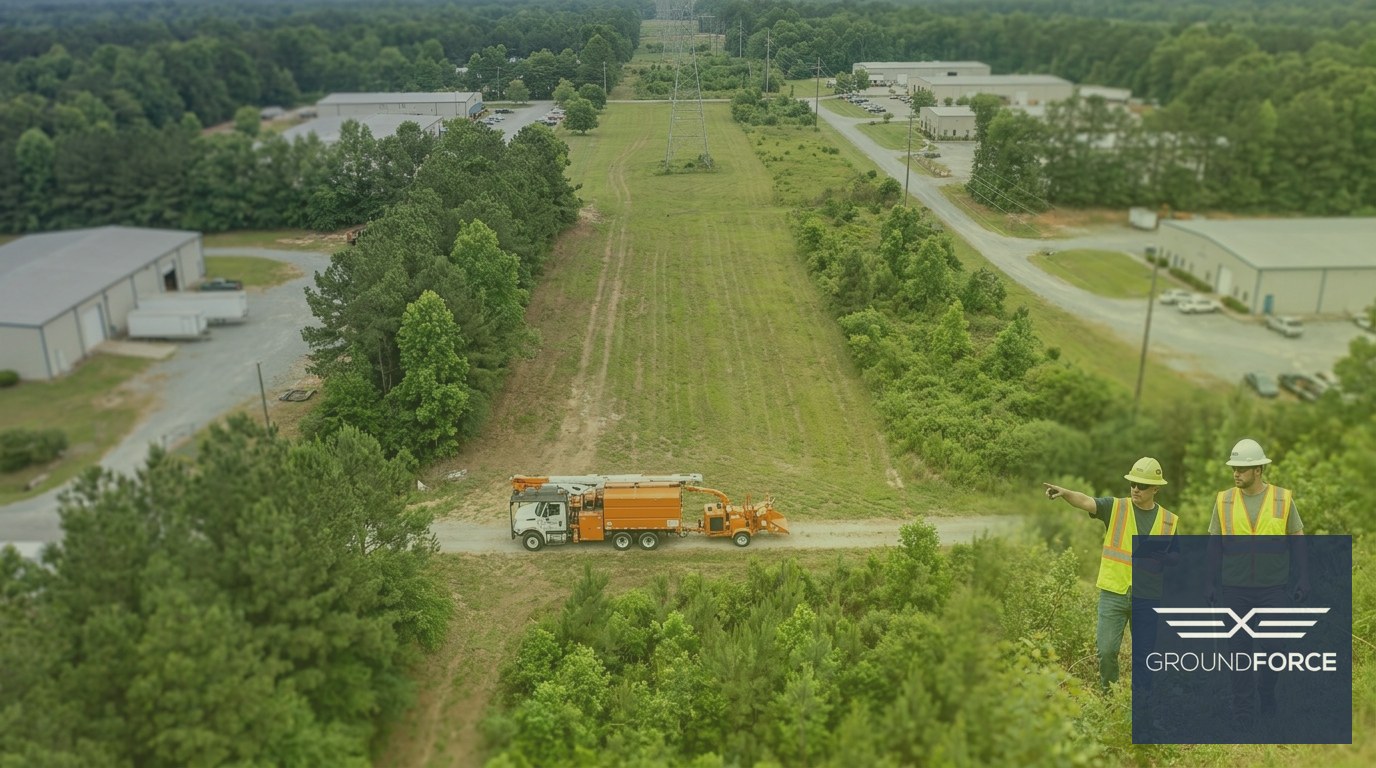
Each vertical carries distinct vegetation requirements. Utilities and telecom operators maintain clearance around lines, towers, and substations. Airports control growth near runways and approach zones. Municipalities manage roadside sightlines, drainage corridors, and public land, while industrial sites protect perimeters and equipment yards. The Georgia commercial sectors we cover describes how Ground Force scopes specifications for each of these environments.
Georgia’s ecology sets the vegetation requirements on these sites. Kudzu, Chinese privet, and cogongrass spread aggressively across the state, and a long, warm growing season produces regrowth rates that outpace calendar-based treatment cycles written for other climates. A national provider running a generic protocol misses local regrowth windows, so invasive pressure returns between scheduled visits and the property owner pays twice for the same ground. Ground Force builds treatment schedules around Georgia’s actual growing conditions rather than a national template. Treatment timing is set by regrowth observed on each site.