
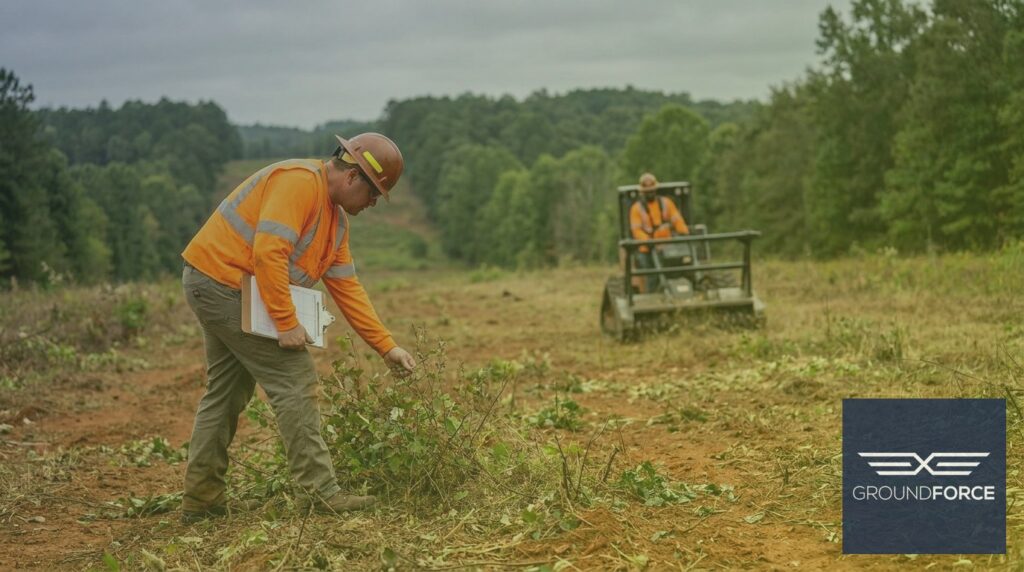
Ground Force applies peer-reviewed integrated vegetation management science to every commercial project in Georgia. Ground Force treats ecological responsibility as an operational standard rather than a marketing claim. Ground Force keeps utility corridors, solar farms, and rights-of-way clear of target vegetation without unnecessary chemical load or habitat destruction.
What does a ‘science-based, eco-friendly’ vegetation management approach actually mean in practice?
A science-based, eco-friendly approach means Ground Force makes every treatment decision through a documented hierarchy with measurable criteria: assess the site, identify target and non-target species, select the lowest-impact effective method, and record outcomes. Every recommendation traces back to site data.
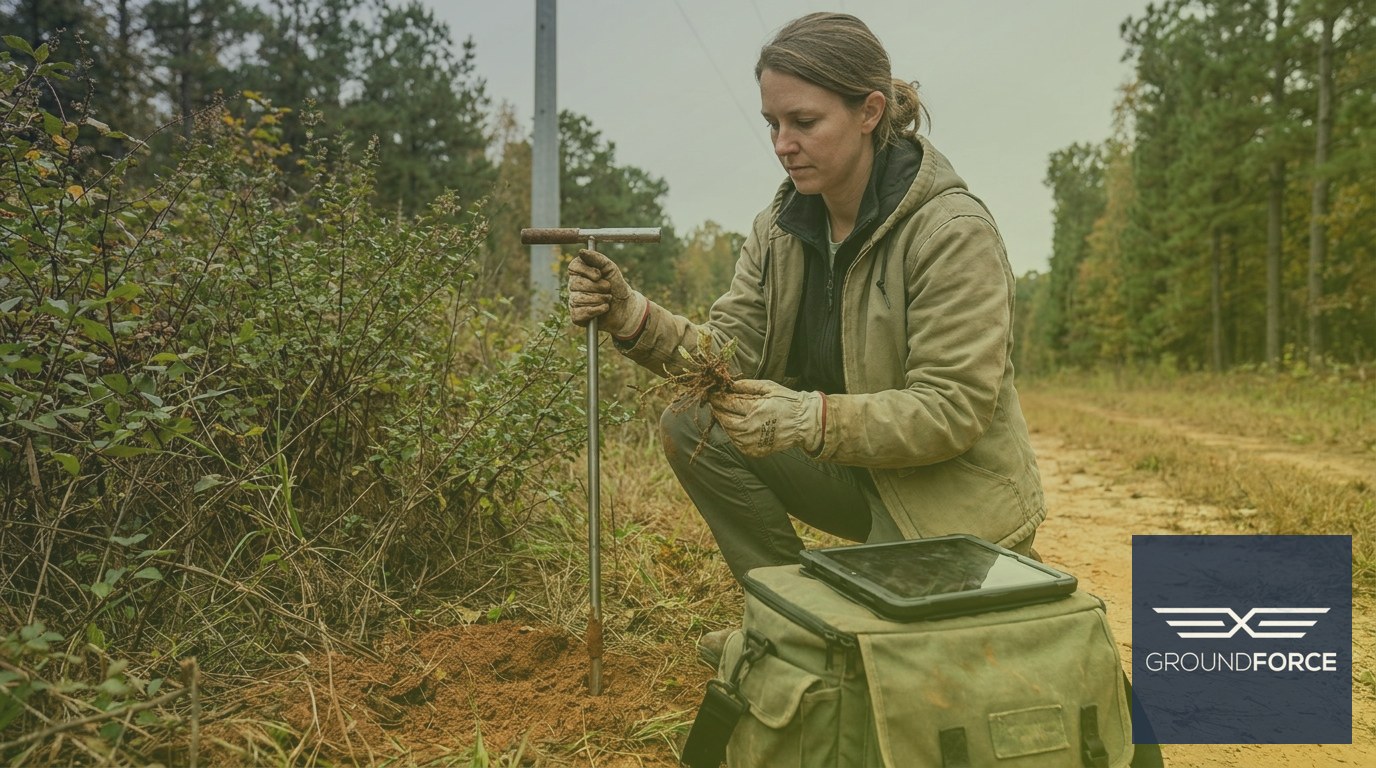
Ground Force’s eco-friendly approach is defined by measurable operational standards: selective chemistry, mechanical-first sequencing, and habitat impact assessments, not marketing language. Any contractor can print the word eco-friendly on a proposal. An operational standard forces every field decision to survive scrutiny.
The decision hierarchy runs in a fixed order.
1. Assess the site: soils, hydrology, slope, and the existing plant community. 2. Identify target and non-target species, including pollinator habitat and desirable native plants. 3. Select the lowest-impact method that still achieves the property’s vegetation objective. 4. Document the treatment, site conditions, and outcome in the client’s record.
Mechanical-first sequencing is the defining standard inside step three. Ground Force evaluates mowing, cutting, and hand removal before any chemical option enters consideration. Selective low-volume herbicide applications occur only when mechanical control is impractical or ecologically disruptive on that site. The sequencing rule corrects a common misconception: eco-friendly vegetation management does not mean using fewer chemicals overall. Eco-friendly vegetation management means applying the right method in the right order, with chemistry held in reserve rather than reached for first.
The science half of the phrase rests on integrated vegetation management. ANSI A300 Part 7 defines IVM as a system in which managers “set objectives, identify compatible and incompatible vegetation, consider action thresholds, and evaluate, select and implement” the most appropriate control methods, according to the U.S. House of Representatives Natural Resources Committee (2014). The U.S. Environmental Protection Agency (2017) lists six IVM control categories: biological, chemical, cultural, manual, mechanical, and controlled burning. Ground Force aligns field protocols with these industry standards for environmentally responsible vegetation care, giving clients a defensible framework rather than a slogan.
Selective chemistry governs the occasions when herbicide is the correct tool. Ground Force chooses the product, the rate, and the timing to minimize off-target impact on non-target plants, soil biology, and waterways, rather than simply minimizing total volume on a spreadsheet. A narrowly targeted application timed to a species’ vulnerable growth window carries less drift risk than repeated broad-spectrum treatments.
Eco-responsibility protects the client as directly as the environment. Documented assessments and application records establish due diligence when a regulator, an adjacent landowner, or a tenant raises questions about drift, runoff, or habitat disturbance. A science-based eco-friendly vegetation management approach converts environmental claims into evidence a property manager can hand to legal counsel or a corporate sustainability office, which guards the client reputationally as much as legally.
Property managers evaluating eco-friendly vegetation management in Georgia can test any contractor against the same standards. Ground Force examines each criterion in what eco-friendly actually means in commercial vegetation management, including examples of practices that qualify and practices that do not.
How does Ground Force apply Integrated Vegetation Management (IVM) principles on commercial projects?
Ground Force uses Integrated Vegetation Management (IVM) principles as the framework for every treatment decision on a commercial project. IVM sequences mechanical, chemical, biological, and cultural controls based on site-specific evidence, and science-based treatment decisions precede any herbicide or mechanical application.
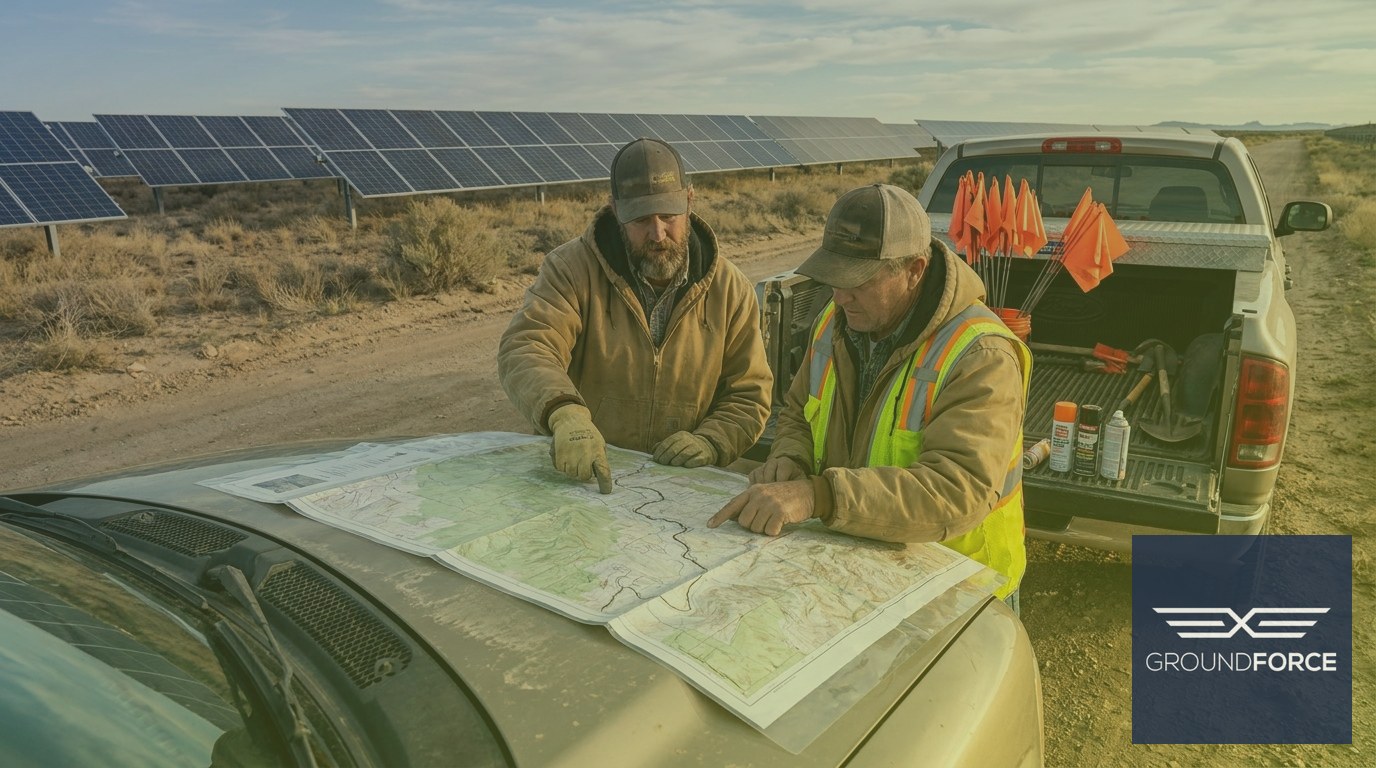
The pre-treatment assessment behind how Ground Force uses integrated vegetation management principles follows a fixed sequence:
1. Zone mapping. Field crews divide the property into management zones by target species, density, growth stage, slope, and proximity to water or desirable plants. 2. Evidence review. Each zone’s conditions determine which control category the data justifies: mechanical clearing or manual cutting, a selective herbicide application, a biological control, or a cultural practice such as reseeding with low-growing native cover. 3. Method matching. The multi-tool vegetation control approach assigns one primary method per zone rather than blanketing the entire site with a single treatment. 4. Monitoring. Post-treatment inspections measure control results and set the prescription for the next cycle.
IVM is the adopted standard for FERC-regulated utilities, state departments of transportation, and federal land managers, and commercial clients benefit from the same rigor. The U.S. Environmental Protection Agency reported in 2017 that IVM practices reduce the need for pesticides and produce measurable results, including greater natural species diversity along rights-of-way and better control of invasive species. A 2025 Bynry overview of electric utility programs documents the same coordinated toolset: mechanical clearing, manual cutting, biological controls, and selective herbicides applied through low-volume foliar, basal bark, and cut-stump methods.
IVM does not avoid herbicides categorically. Where repeated mechanical cutting would tear up sensitive soil or root systems, one selective herbicide application is the lower-impact choice. That zone-by-zone tradeoff is how IVM balances ecology and control in practice.
The framework scales by site complexity, not by client size. Ground Force applies the identical decision sequence on utility rights-of-way and solar farms and on smaller HOA and municipal properties.
Why does Georgia’s ecology require site-specific vegetation management plans rather than standard protocols?
Georgia’s ecological diversity requires site-specific treatment plans rather than one-size-fits-all vegetation management protocols. Distinct soil geology, jurisdictional wetlands, and invasive species pressure change the chemistry, timing, and method each corridor demands.
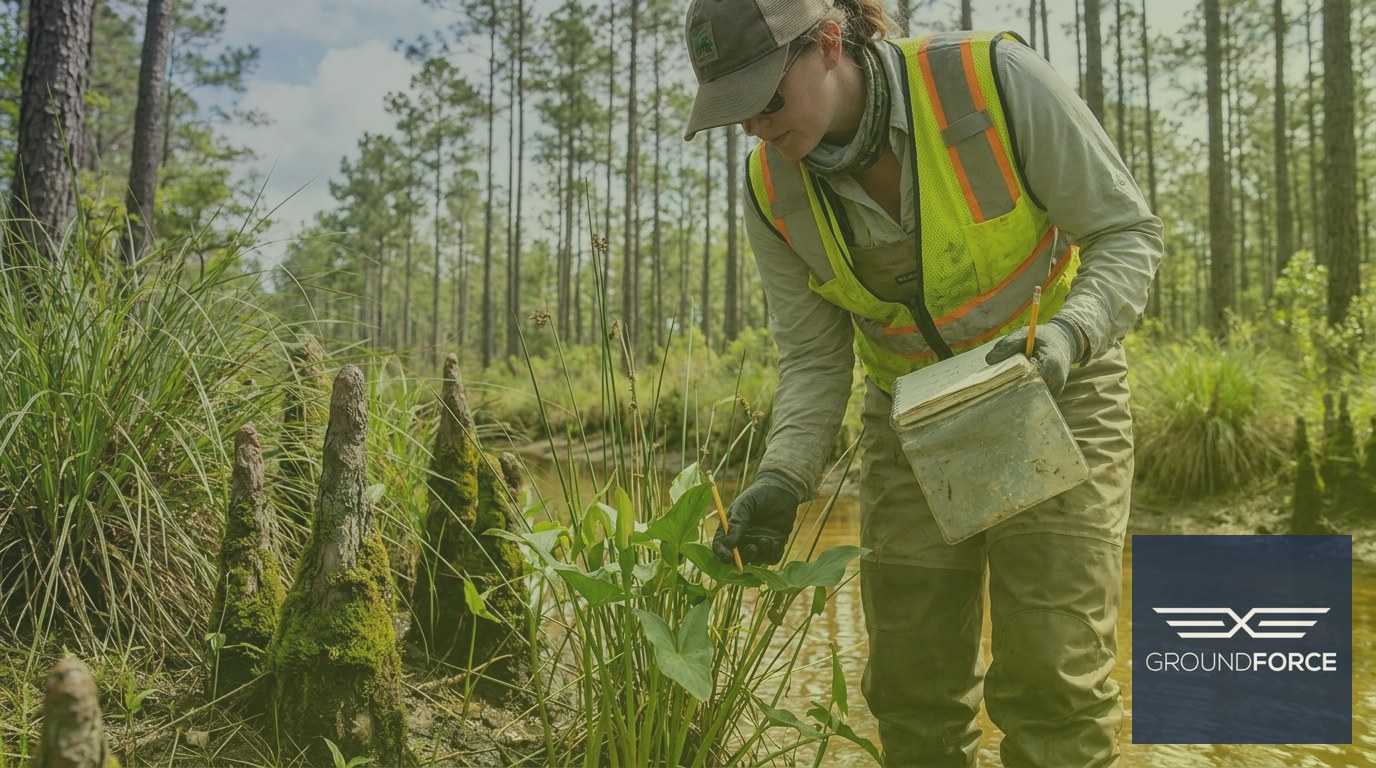
The University of Georgia’s Natural Resources Spatial Analysis Laboratory divides Georgia into five physiographic provinces, and the two major ones, the Piedmont and the Coastal Plain, differ at the bedrock level. Piedmont soils are fine-textured and highly erodible, while Coastal Plain parent material is acidic, marine-origin sand and sandy clay. A single project corridor crossing the transition zone holds both, with different plant communities and hydrology on each side. A science-based contractor adapts treatment by zone, a distinction most statewide blanket protocols do not make.
Wetland adjacency raises the stakes further. Treatment near jurisdictional wetlands requires different chemistry and timing than upland corridors. In Georgia, that work falls under Army Corps of Engineers Section 404 and Georgia EPD permits, and contractors without licensed pesticide applicators operating near jurisdictional waters expose clients to significant regulatory liability.
Invasive pressure compounds the problem. Kudzu covers an estimated 227,000 acres of Southern forests, according to UGA’s College of Agricultural and Environmental Sciences. Chinese privet occupies nearly 717,000 acres of Georgia forest land and has topped the Georgia Forestry Commission’s Dirty Dozen list since 2009, per a 2023 UGA Cooperative Extension report. Cogongrass reached 2,176 known spots across 78 counties in 2024, a roughly 29 percent increase in new detections, the Georgia Forestry Commission reported in 2025. Each species responds to different active ingredients and application windows that generic protocols miss.
Site-specific planning pays for itself. Matching treatment to zone, wetland status, and target species reduces retreatment frequency, which lowers long-run client cost. The analysis why the industry is shifting to eco-friendly practices ties this same zone-by-zone discipline to reduced chemical volume across a corridor’s life.
Why does Ground Force’s structure and credentials make it a trustworthy vegetation management partner?
Ground Force earns trust through three verifiable foundations: a family-owned structure that produces direct operator accountability, Georgia-required licenses that legally authorize commercial vegetation management operations, and a safety culture that governs workers, the public, and non-target species under one discipline.
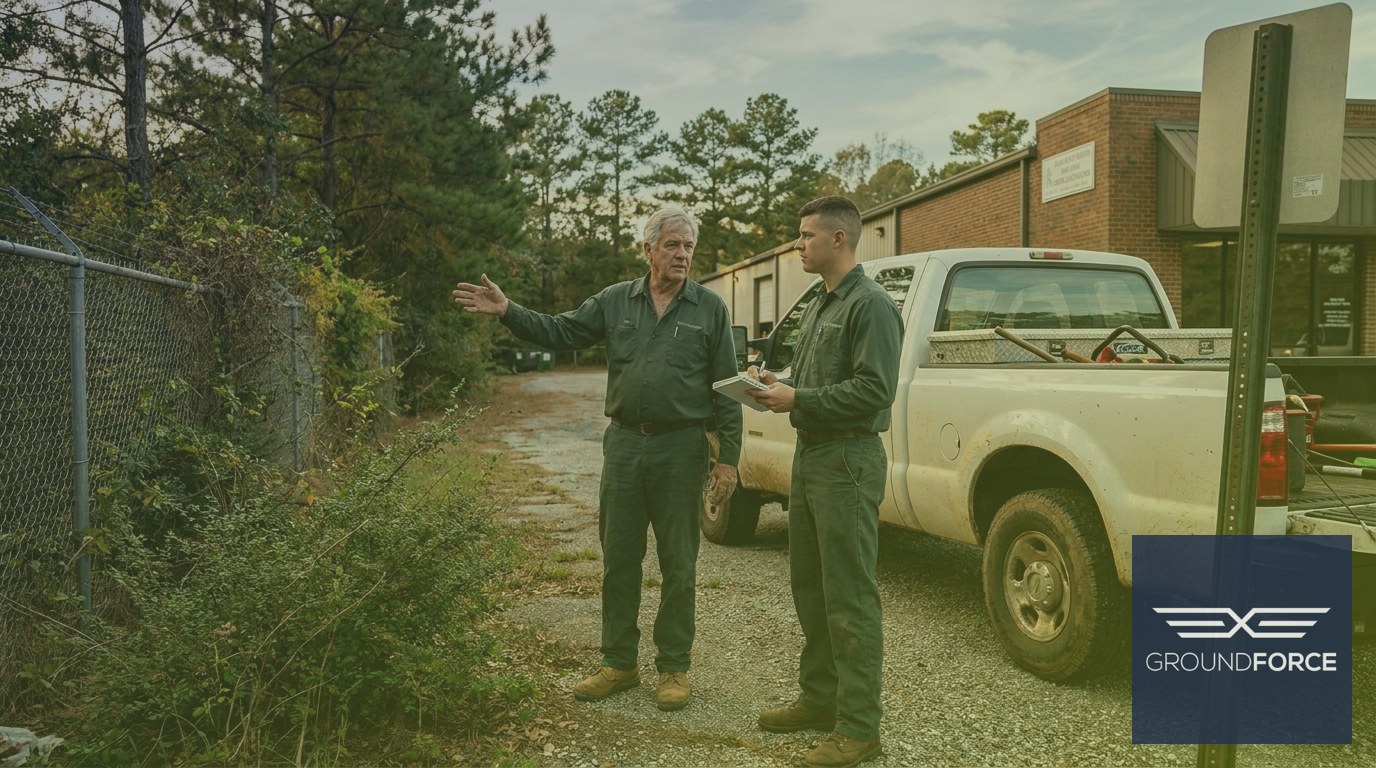
Ground Force’s family-owned structure produces direct operator accountability for ecological outcomes that large national contractors cannot replicate. The people who decide how a site gets treated also operate the equipment and answer for the results, so every herbicide selection and every cut carries a personal stake. The reasons why family-owned vegetation management companies deliver better service trace back to this ownership dynamic.
Ground Force holds Georgia-required licenses and certifications that legally authorize commercial vegetation management operations. The core credential is the commercial pesticide applicator license issued by the Georgia Department of Agriculture, which authorizes herbicide application on commercial properties, industrial sites, and rights-of-way; a contractor without that license cannot legally perform the selective herbicide work that eco-friendly vegetation management requires. The state certifications for Georgia vegetation contractors specify each license category and what it permits, and the licensing and certifications for vegetation management in Georgia explain why these credentials matter to commercial clients evaluating liability.
Safety and ecological responsibility run on the same operational discipline. The protocols that protect a crew from equipment and chemical exposure also protect the public near active work sites and keep herbicide away from non-target species; a contractor cannot be careless with one and careful with the other. Our crew safety standards and protocols govern every Ground Force project, and the safety culture in commercial vegetation management connects worker protection directly to environmental outcomes.
How does Ground Force’s client philosophy translate the science-based approach into project outcomes?
Ground Force converts its scientific methodology into project outcomes through four operating rules: the team diagnoses the outcome a property needs before proposing work, pursues long-term vegetation suppression over repeat visits, and reports measured results that hold the science accountable.
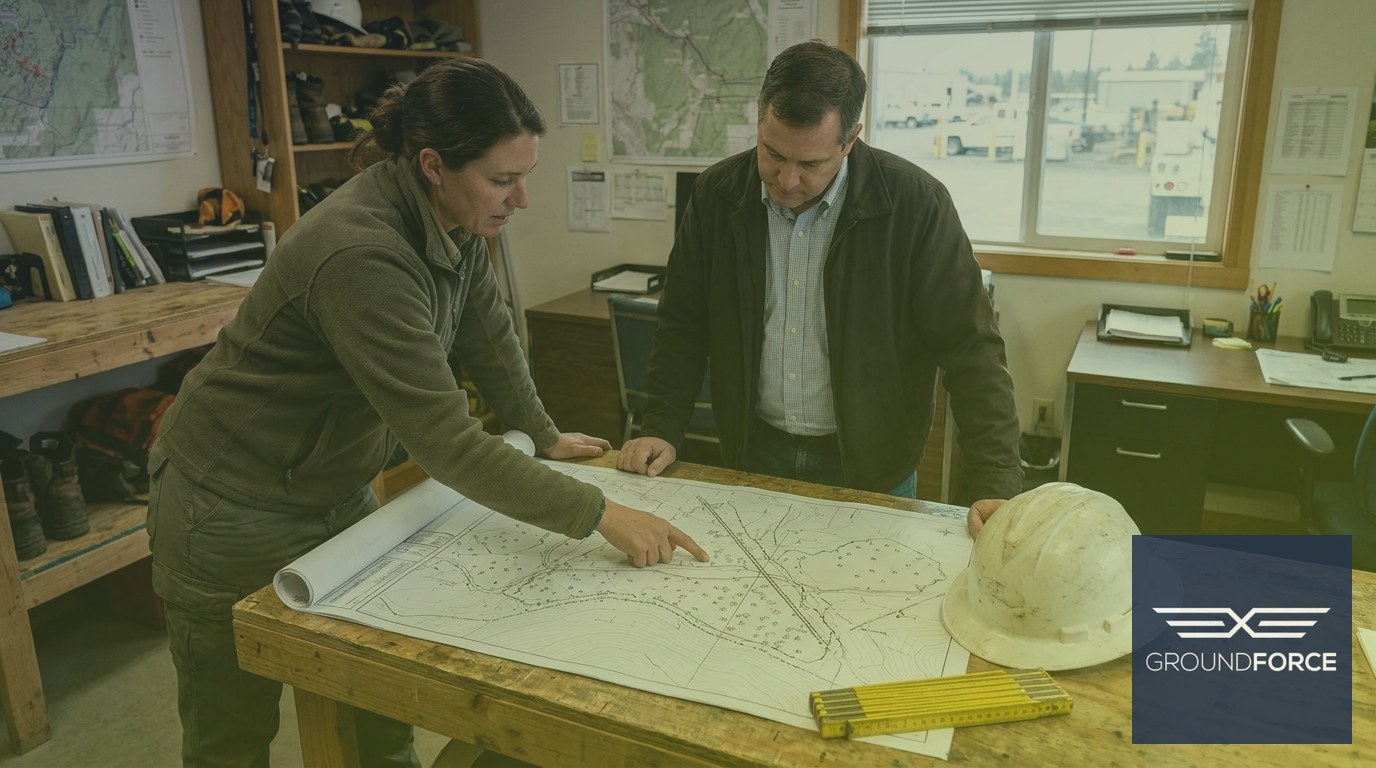
1. Diagnose before proposing. Ground Force determines what outcome the property actually needs, whether bare-ground compliance, fuel-load reduction, or sight-line clearance, before recommending a method or frequency. The proposal prices a result instead of a visit schedule. 2. Target long-term suppression. Success means the site requires less intervention each season. Repeat service visits serve that trajectory; they never exist for their own sake, and a declining treatment schedule is the metric Ground Force expects to be judged on. 3. Report outcomes against the prediction. Each project closes with documentation of the method selected at diagnosis, the application rate and timing, and the measured vegetation response. The client can verify that the chosen treatment produced the predicted suppression, which makes the scientific methodology itself accountable. 4. Stop when the problem is solved. A solved problem ends the scope. Ground Force recommends reduced frequency or program exit once the suppression data supports that reduction.
Ground Force’s client problem-solving philosophy details how the company solves problems rather than sells services, with outcome targets replacing visit quotas in every recommendation. The personalized service from independent vegetation firms explains how direct owner involvement shapes what a contractor recommends.