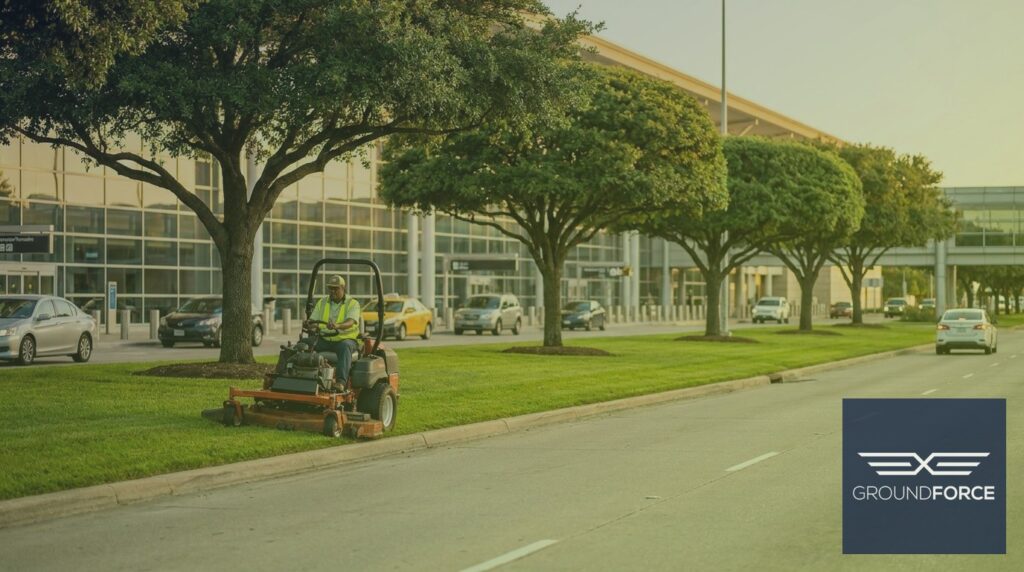
Landside and terminal area vegetation management is the grounds discipline that governs Georgia airport terminal frontages, parking facilities, access roads, stormwater detention ponds, and general aviation campuses outside the FAA-regulated airside boundary. Georgia airport landside areas demand a vegetation management standard that balances public-facing appearance, operational safety, and environmental compliance in the state’s year-round growing climate. Ground Force delivers that standard through vegetation management programs built specifically for Georgia commercial airport grounds.
What is landside vegetation management at a Georgia airport, and how does it differ from airside management?
Airport landside is the non-secured public-access zone encompassing terminal areas, parking facilities, access roads, detention ponds, and general aviation campuses outside the FAA-controlled airside boundary. Landside vegetation management maintains these zones for operational safety and regulatory compliance rather than ornamental design.
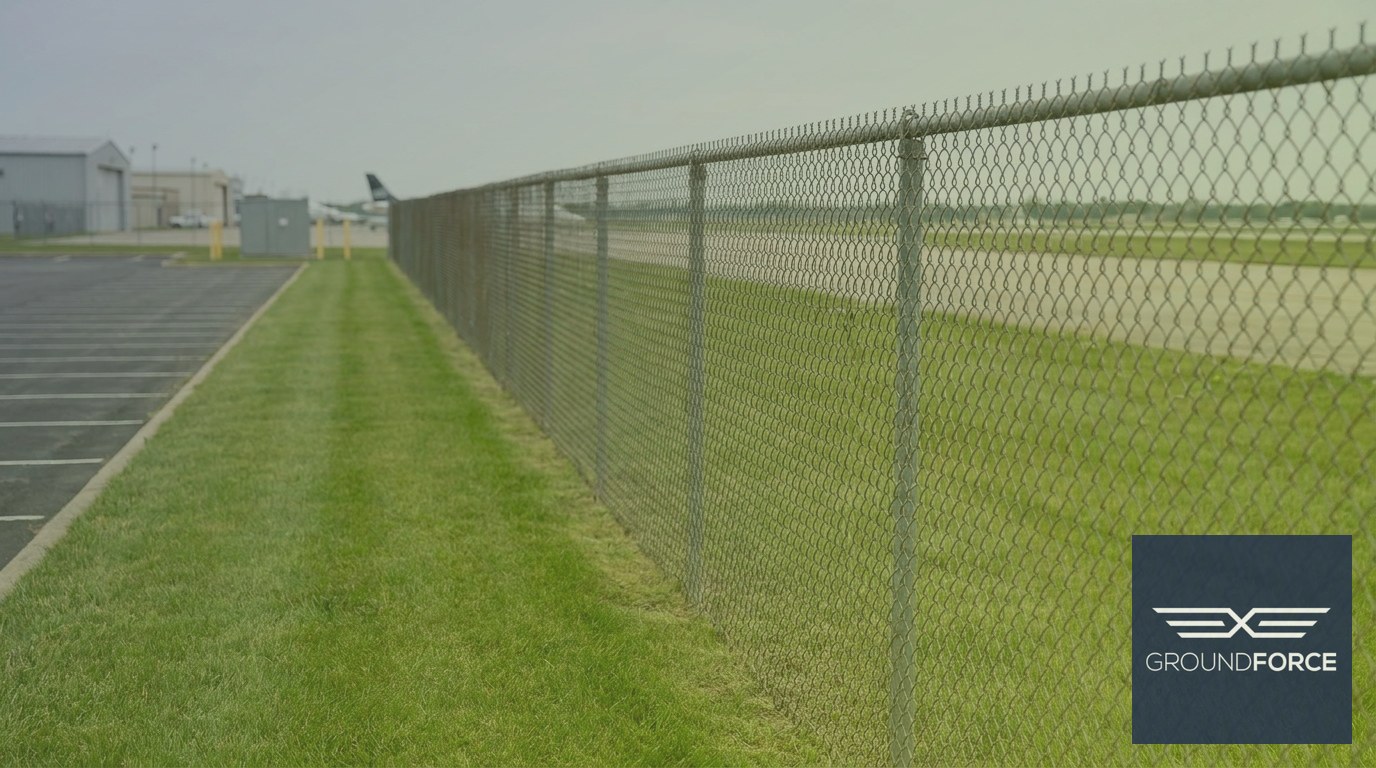
The perimeter security fence marks the divide. Everything on the public side of that fence, from the terminal curb to the farthest economy lot, falls under landside jurisdiction. At Hartsfield-Jackson Atlanta International Airport, that footprint spans a terminal complex, several parking products, rental car facilities, and entrance roadway corridors, each carrying its own specification. The landside terminal vegetation programs at an airport of this scale run as scheduled route operations with zone-by-zone standards, not as periodic grounds cleanup.
Airside management answers to federal wildlife hazard standards. The airside regulatory vegetation requirements cover FAA Advisory Circular 150/5200-33, which controls hazardous wildlife attractants on and near airports. Landside turf is not subject to that advisory circular, but landside carries its own obligations. Georgia Department of Transportation right-of-way and sight-distance standards govern vegetation along airport entrance corridors and access road shoulders, local stormwater permits dictate mowing and inspection cycles in detention basins, and the 2005 FAA/USDA Wildlife Hazard Management at Airports manual, cited in 2009 Port of Portland guidance, directs that berry- or fruit-producing trees and landscaping plants not be used on the street side of airports.
Landside vegetation management is distinct from decorative airport landscaping: it prioritizes operational safety, stormwater compliance, and wildlife pressure reduction over aesthetics. A functional specification names turf height limits, weed suppression targets, sight-line clearance at intersections, and invasive species removal; an ornamental specification names bloom cycles and mulch depth. According to 2009 Port of Portland airport landscape guidance, the primary goal of airport landscape management is reducing the aviation wildlife species of concern attracted to the airport environment and eliminating vertical intrusion of vegetation into aircraft operating airspace. The landscaping vs. vegetation management at airports distinction determines how contracts are written, and the sustainable airfield grounds programs Georgia airports commission split landside and airside into separate service zones.
A large Georgia commercial airport organizes landside work into five recurring zones:
- Terminal curbside medians and parking lot islands: the highest-visibility landside zones, subject to the most public scrutiny. Their maintenance schedules balance appearance with functional height control because overgrown medians create sight-line hazards for curbside vehicle traffic.
- Economy parking fields and rental car lots: broad acreage requiring turf height control and pavement-edge weed suppression.
- Access road shoulders and entrance corridors: roadside vegetation held to Georgia Department of Transportation right-of-way and sight-distance standards.
- Stormwater detention basins: compliance mowing, embankment access, and invasive species removal under the airport’s stormwater permit.
- General aviation campuses: FBO ramps, hangar aprons, and GA tie-down areas with lighter traffic and less paving, where turf grows more actively and the campus operates as its own service zone apart from the main terminal.
Does landside vegetation affect wildlife hazard risk at Georgia airports?
Yes. Landside vegetation causes indirect wildlife attractant pressure that migrates into adjacent airside zones when left unmanaged. Seed-bearing ornamentals, unmowed medians, and poorly managed pond edges draw birds and mammals that then move toward runways and taxiways.
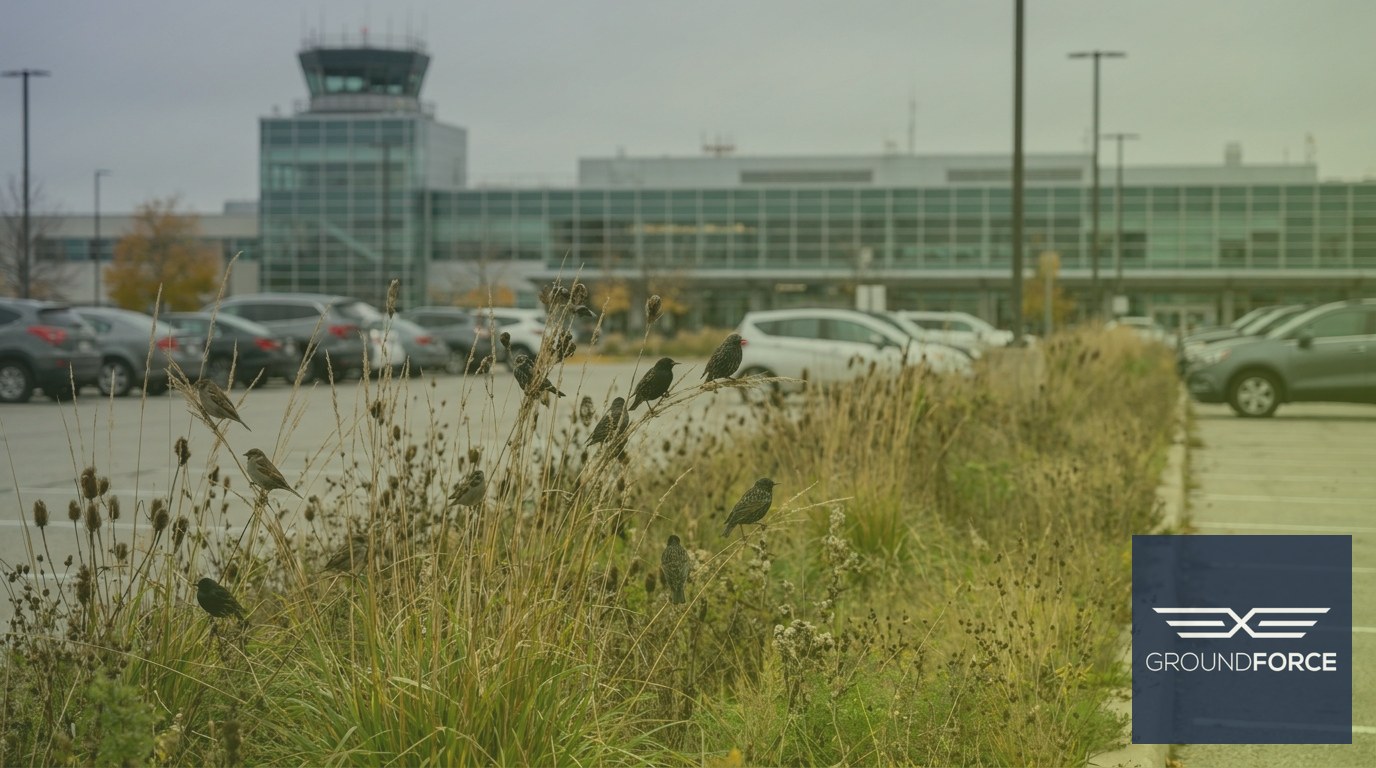
The exposure is national in scale. AVweb reported more than 22,000 wildlife strikes involving U.S. civil aircraft in 2024, roughly 61 per day, and USDA Animal and Plant Health Inspection Service data show airports in the Eastern and Southeastern United States record the greatest number of wildlife-aircraft collisions. Georgia airports sit inside that high-collision region.
Four landside vegetation conditions create most of this pressure. Fruiting shrubs feed birds through fall and winter. Tall fescue gone to seed provides food and cover. Standing water in poorly drained turf attracts waterfowl and wading birds. Dense ground cover near terminal buildings shelters small mammals and the raptors that hunt them. The turf management for airport parking areas covers mowing frequency and drainage correction, the two controls that keep parking-lot turf from seeding out or holding water.
Georgia’s resident Canada geese, European starlings, and white-tailed deer routinely cross the landside-airside boundary when landside conditions are favorable. Research indexed in the University of Nebraska Digital Commons found Canada geese pose greater risks than many bird species because of their size and flocking behavior, and PubMed Central notes geese favor the short managed grassland typical of airport grounds.
White-tailed deer attracted by landside ornamental plantings are a documented strike hazard at Georgia airports during dusk and dawn. Deer pressure is a landside vegetation management outcome, not solely a perimeter fence problem.
The blind spot is organizational. Airport operators who treat landside grounds as purely aesthetic miss this indirect hazard pathway; a median planting chosen for curb appeal functions as a feeding station, and no amount of airside hazing compensates for attractants growing on the wrong side of the perimeter fence.
How is vegetation managed around airport stormwater detention ponds on the landside?
Vegetation around landside airport stormwater detention ponds is managed under dual regulatory compliance: Georgia EPD stormwater buffer rules and FAA wildlife hazard reduction guidance. Airport grounds managers resolve the conflict with low-growing native grass buffers maintained at 6 to 14 inches, paired with accelerated inspection and mowing cycles.
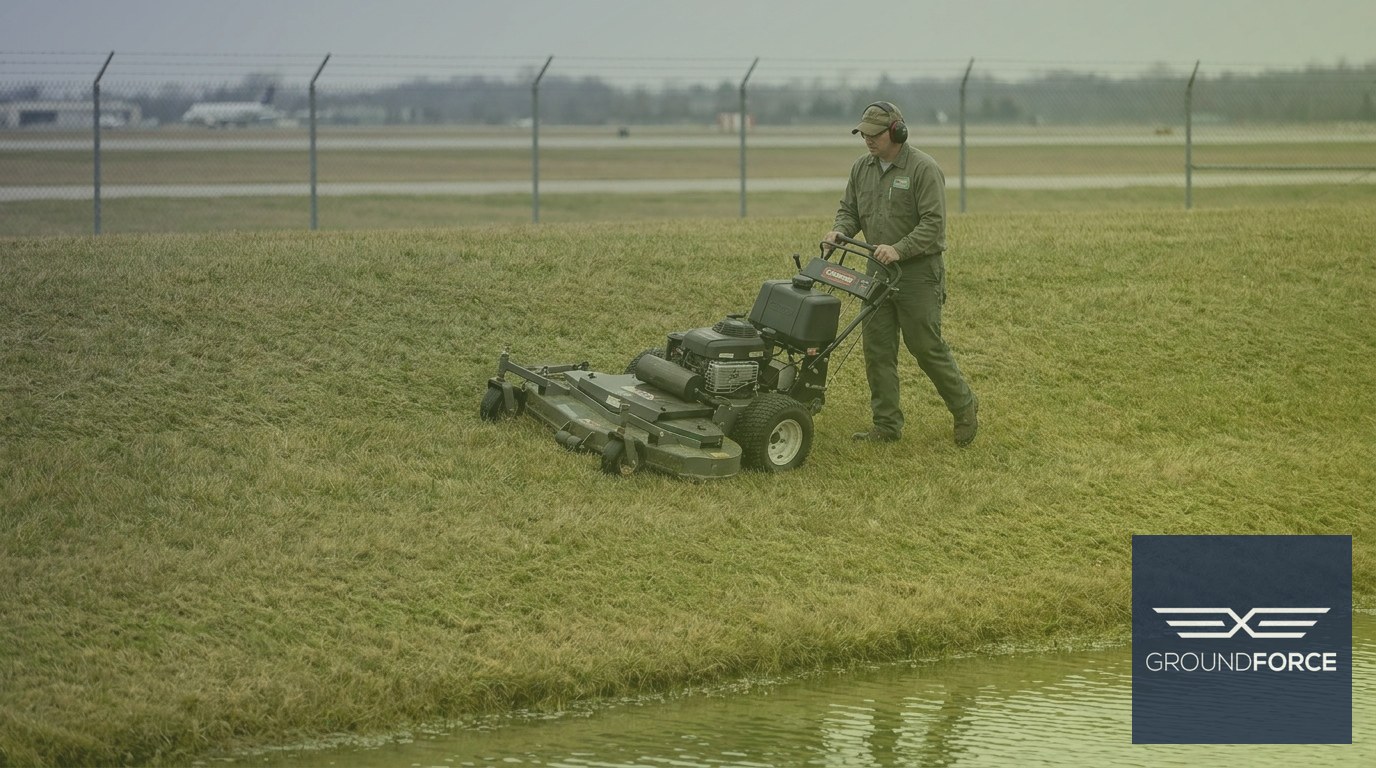
Dual regulatory compliance applies to detention and retention pond vegetation at airports, and the two agencies pull in opposite directions. Georgia EPD’s 2016 NPDES General Permit for Stormwater requires a 25-foot buffer along the banks of State waters, and EPD confirmed in 2017 that draining a pond does not eliminate the buffer obligation. FAA Advisory Circular 150/5200-33C (2020) identifies stormwater facilities and retention ponds as attractants for hazardous wildlife and discourages tall or seed-bearing vegetation near airport operations.
Stormwater detention ponds on airport property therefore sit at a genuine regulatory conflict point, and the resolution is a managed low-growing native grass buffer maintained at a specific height band, typically 6 to 14 inches, that satisfies both regulators simultaneously. Practical execution follows a fixed sequence:
1. Establish the buffer. Plant low-growing native grasses across the pond perimeter. FAA guidance requires vegetation that minimizes standing water, and erosion mixes should not include high quantities of millet or clover. 2. Control water duration. FAA AC 150/5200-33C directs airport operators to modify detention ponds for a maximum 48-hour detention period for the design storm, because open water combined with vegetation attracts waterfowl. 3. Mow and inspect on a shortened cycle. Stormwater pond vegetation at airport facilities requires more frequent inspection and cutting than typical commercial stormwater basins, because each week of unchecked growth raises the wildlife hazard profile of the pond edge.
How often does landside vegetation need to be managed at Georgia airports, and what methods does Ground Force use?
Ground Force manages airport landside vegetation on a scheduled annual program of 18 to 22 mowing events per actively growing turf zone, plus winter weed control and herbicide applications timed to Georgia’s growing calendar. Ground Force applies eco-friendly methods that include low-chemical integrated pest management, targeted herbicide application, and native grass establishment.
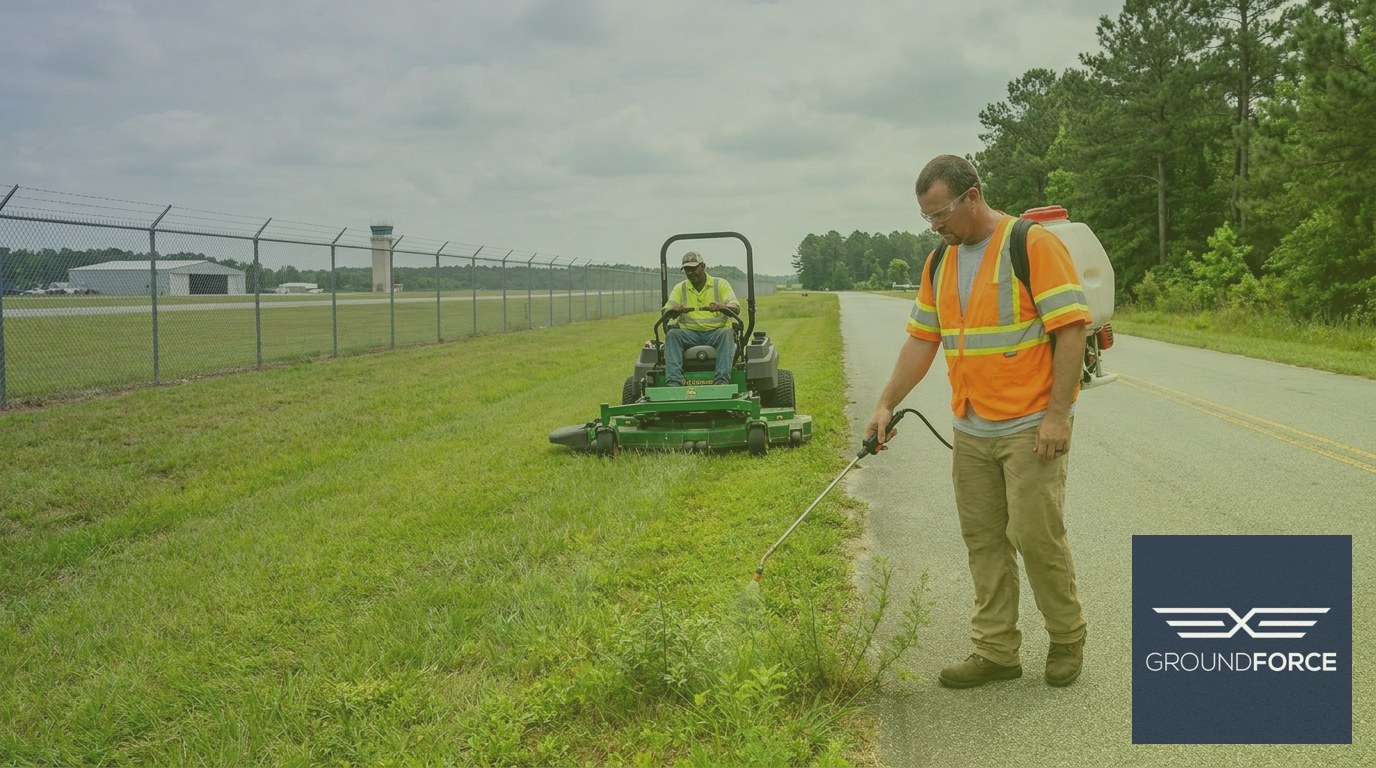
Georgia’s year-round growing season requires a scheduled, multi-visit annual vegetation management program rather than reactive mowing for airport landside areas. Humid subtropical conditions push turf on access roads and parking islands to 18 to 22 mowing events per year, a service frequency most decorative landscaping contracts are not structured to deliver. The frequency gap explains why airport-specific vegetation management contracts differ materially in scope and pricing from standard commercial agreements, and it drives the year-round airport vegetation scheduling Georgia airports operate under.
Ground Force structures the annual program around Georgia’s growing calendar.
1. Spring through fall: Crews mow terminal landscaping, parking islands, and access road shoulders at high frequency, with intervals set by turf growth rate rather than a fixed monthly route. 2. Growing-season herbicide windows: Applicators time pre-emergent and post-emergent treatments to Georgia’s growing calendar, targeting weeds at their most vulnerable growth stages. 3. Winter dormancy: Crews shift to dormant-season weed control and site inspection while turf growth stops.
Eco-friendly vegetation management methods apply to airport landside zones including low-chemical herbicide programs, native plant stabilization, and integrated pest management. Ground Force uses targeted spot application instead of broadcast spraying, which reduces total chemical volume across terminal grounds. Native grass establishment on low-traffic shoulders lowers long-term mowing frequency because adapted species grow slowly and tolerate Georgia’s rainfall without irrigation or fertilizer inputs.
Consistent mowing also serves a wildlife-hazard function. According to a peer-reviewed study published on ResearchGate, airfield areas containing older, unmowed vegetation drew higher bird and mammal use, and unmanaged vegetation held more small mammals. Managed landside turf removes that habitat incentive along the airside boundary.
How do airport authorities and operations managers contract landside vegetation management services in Georgia?
Georgia airport directors, operations managers, FBO facility managers, and county or municipal airport authorities contract landside vegetation management by issuing a written scope covering zone maps, service frequency, herbicide policy, and wildlife attractant reduction, then awarding the work to a qualified provider.
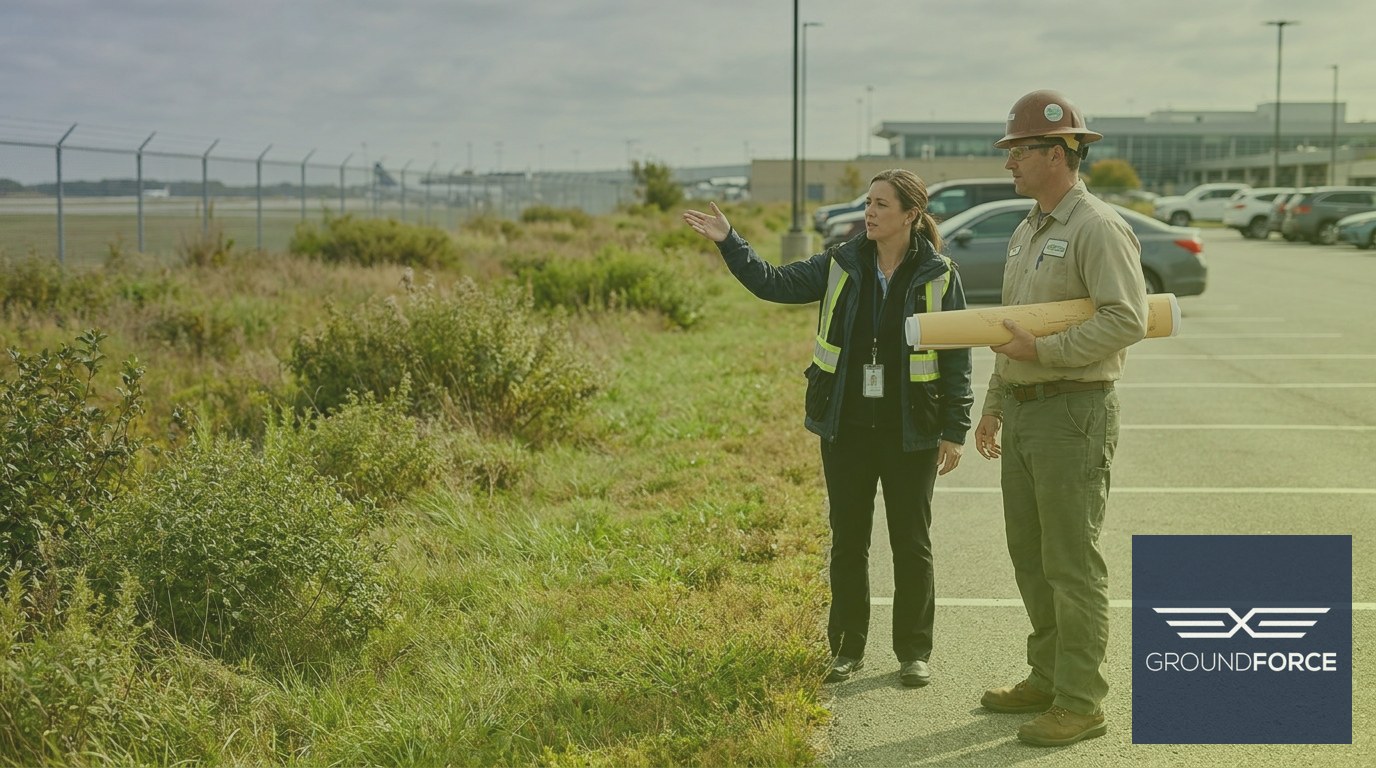
1. Assign decision authority. Airport directors and operations managers hold procurement responsibility at commercial airports, while county and municipal airport authorities approve contracts at publicly owned regional airports. FBO facility managers contract vegetation services for general aviation campuses, including properties with private airstrip vegetation control needs.
2. Define the scope in writing. A landside contract scope specifies zone maps dividing terminal landscaping, access roads, parking facilities, and stormwater areas; service frequency schedules per zone; an herbicide use policy naming approved products and application windows; wildlife attractant reduction protocols; and reporting requirements.
3. Build federal compliance into the scope. According to the Port of Portland (2009), all FAA Part 139 certificated airports and airports receiving federal funding must adhere to FAA Advisory Circulars on landscaping and wildlife hazards, so contract standards must tie vegetation heights and species selection to those circulars.
4. Phase the work when budgets are limited. Smaller regional Georgia airports prioritize detention pond edges and access road shoulders first, the highest risk zones, then expand coverage to parking areas and terminal turf as budget allows.
5. Select and contract the provider. Airport authorities, FBO operators, and airport operations managers at Georgia commercial and regional airports use Ground Force airport landside vegetation management for contracted grounds programs. How to Bid and Contract Vegetation Management at Georgia Airports details airport vegetation contract procurement from scope drafting through award and documents how Ground Force structures those agreements.